



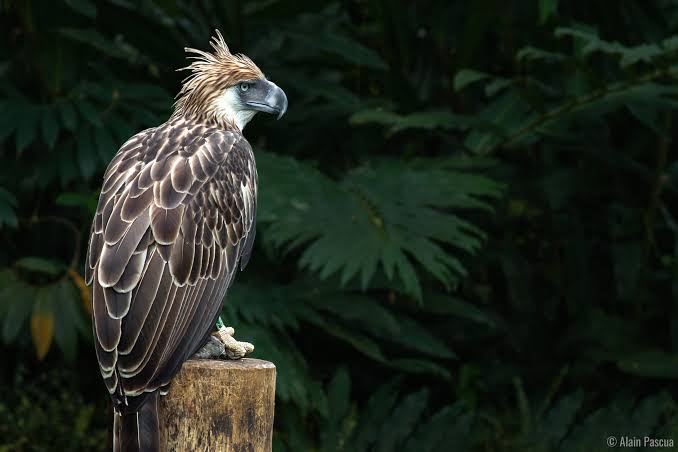
Efforts to protect the critically endangered Philippine eagle are expanding beyond the Philippine Eagle Center as the government, conservation groups and Indigenous Peoples communities begin planning conservation work within ancestral domains and key biodiversity areas in Eastern Mindanao.
The initiatives, launched Tuesday at the Philippine Eagle Center (PEC) in Malagos, Davao, will combine Indigenous knowledge and customary governance with conservation science to strengthen protection of eagle habitats and other wildlife.
The Department of Environment and Natural Resources (DENR), Philippine Eagle Foundation (PEF), Department of Tourism Region 11, National Commission on Indigenous Peoples (NCIP) and Indigenous Peoples communities are working together on the two planning initiatives.
PEF Director for Operations Jason Ibanes said only 392 pairs of Philippine eagles remain across Luzon, Eastern Visayas and Mindanao.
Mindanao continues to serve as the species’ main stronghold, but habitat loss and preventable deaths remain threats, particularly among young eagles that are still trying to reach maturity.
DENR Secretary Juan Miguel Cuna said the situation requires immediate action to protect remaining forests and nesting sites.
“This is an urgent call to action. We do not have the luxury of time. Every single forest patch we keep intact, every active nest we safeguard, and every avoidable eagle death we prevent matters directly to the survival of this species,” Cuna said.
One planning initiative will focus on selected ancestral domains within the Eastern Mindanao Biodiversity Corridor. The partners will improve the Ancestral Domain Sustainable Development and Protection Plan (ADSDPP) and develop community-based conservation measures.
The planning process will incorporate customary governance and Indigenous knowledge with conservation science, ecosystem management, spatial planning and community-based monitoring.
Cuna said the approach recognizes Indigenous communities not only as beneficiaries but also as rights holders, knowledge holders, conservation partners and decision-makers in their ancestral domains.
The second initiative will chart the development of the PEC as an eco-cultural tourism destination, educational park and conservation academy.
The proposed five-year planning process will include consultations with stakeholders, a review of tourism products and policies, development of the conservation academy, integration of Indigenous knowledge, eco-cultural tourism, climate resilience and improvements to visitor experience.
Cuna said conservation efforts will also include educating communities about threats to Philippine eagles, including shooting and accidental trapping.
He added that the program will also provide Indigenous communities with training on watershed management, wildlife conservation and related environmental concerns.
Cuna described the Philippine eagle as a national symbol and an important part of the country’s natural heritage, but warned that the species remains at a high risk of extinction in the wild.
“The Philippine Eagle is a magnificent symbol of our national identity, our natural heritage, and the biological wealth of our country. Yet, today, it remains critically endangered and faces a very high risk of extinction in the wild,” Cuna said.
Manobo leader Datu Rodino Domogoy welcomed the partnership and thanked the DENR and PEF for recognizing the role of Indigenous communities in environmental protection.
He also urged Indigenous communities across the country to take an active role in protecting wildlife and forest ecosystems.
Photo courtesy of Alain Pascua, Edge of Existence Org















Comments