



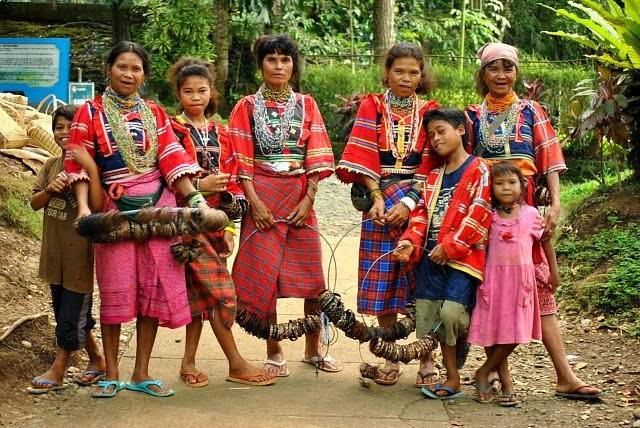
Schools should take a more active role in keeping indigenous knowledge alive by bringing traditional practices into the classroom, a lawmaker said Thursday as she cited an Abra school’s weaving program as a model for cultural preservation.
Solid North Party-list Rep. Ching Bernos, vice chairperson of the House committee on Indigenous Cultural Communities and Indigenous Peoples, said integrating indigenous practices into the senior high school curriculum could help pass cultural knowledge from one generation to the next.
She cited the Peñarrubia Integrated School in Abra, which recently began offering weaving as a senior high school subject covering natural dyeing, weaving and embroidery.
The lessons feature designs reflecting the culture of the Tingguian, or Itneg, people.
The Peñarrubia local government is supporting the program by providing funds for tilar, or foot looms, as well as threads and other materials that students need to learn the craft.
“I would like to laud the efforts of my own kailian (province mates) in Abra to preserve our weaving tradition by integrating it into the senior high school (SHS) curriculum. Such a move will help ensure the transfer of knowledge on a pillar of our heritage,” Bernos said in a news release.
“I hope that other towns and schools across the country will follow suit in becoming active partners in the preservation of indigenous knowledge and practices.”
Bernos said exposing students to indigenous traditions could encourage the younger generation to take part in keeping these practices alive as the country modernizes.
She also stressed the importance of integrating indigenous peoples’ products and knowledge into contemporary society to help indigenous communities remain sustainable in the modern world.
Beyond curriculum integration, Bernos urged Congress to begin deliberations on House Bill No. 3111, or the Philippine Neo-Ethnic Textile Development bill, which seeks to require state universities and colleges, as well as local universities and colleges, to use neo-ethnic Philippine textiles in their academic regalia.
The bill defines neo-ethnic textiles as products made of or containing natural or indigenous materials sourced or produced in the Philippines using updated and environmentally friendly scientific and technological approaches while retaining or incorporating traditional patterns, designs, icons, motifs or methods.
Bernos said the proposed measure would connect cultural preservation with livelihood opportunities for weaving communities.
“House Bill No. 3111, or the Philippine Neo-Ethnic Textile Development bill, could help both in preserving the deep-rooted culture of handloom weaving and in providing opportunities for weaving communities to engage and benefit from neo-ethnic textile production,” she said.
The proposal also seeks to formally recognize weaving as intangible cultural heritage and establish sustained government support for skills transmission, production, innovation and marketing.
Bernos said the measure would also seek to empower weavers, particularly women, through greater access to livelihood opportunities, training, infrastructure and social protection.
Photo courtesy of Ma. Eugenie F. Lim















Comments