



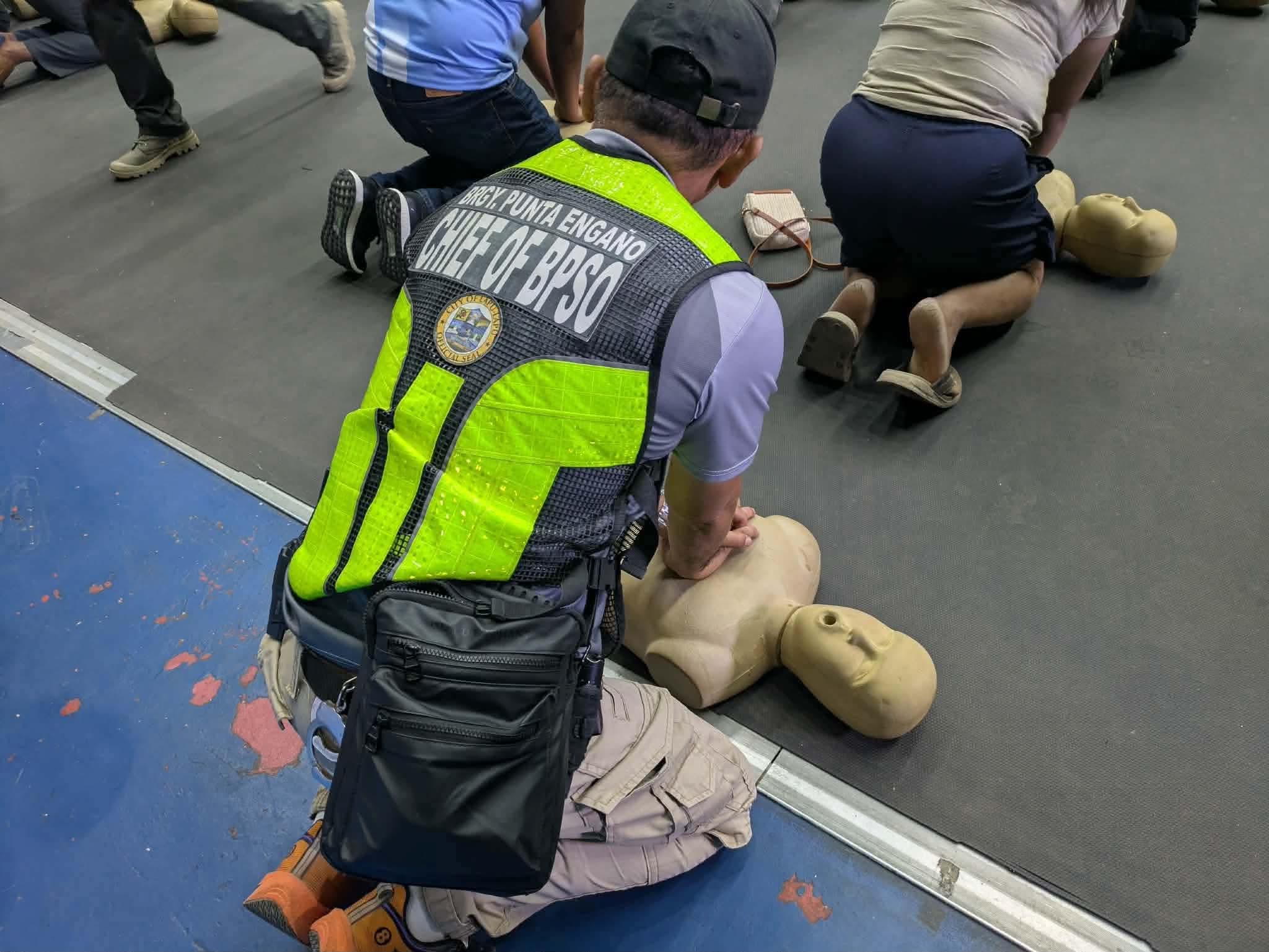
Ordinary Cebuanos can help save lives during cardiac emergencies by learning basic hands-only cardiopulmonary resuscitation (CPR), Lapu-Lapu City officials and health advocates said during a training that gathered about 1,000 volunteers Saturday, Sept. 12.
The Sagip CPR training at the Lapu-Lapu City Hoops Dome sought to equip residents from various sectors with lifesaving skills they can use while waiting for professional emergency responders.
Lapu-Lapu City Councilor Dr. Emilio Galaroza Jr., chairperson of the City Council Committee on Health, said emergencies can happen without warning, making immediate action from people at the scene crucial.
He said proper hands-only CPR can help maintain blood circulation to the brain and other vital organs through chest compressions while emergency personnel are on the way.
“A person who knows what to do can make a difference between life and death,” Galaroza said.
“Mao nga importante kayo ang hands-only CPR. Pinaagi sa hustong chest compression, mahimo natong matabangan ang pagpadayan sa pag-agos sa dugo ngadto sa utok ug ubang importanteng organs, samtang naghulat ug nagpaabot kita sa mga emergency responders,” he added.
Patrick Laraga, corporate communications and public affairs head of Bell-Kenz Pharma Inc., said bystanders are often the first people present when emergencies occur, making their ability to respond immediately important.
“Lahat naman ito pwedeng mangyari kahit kanino. At the same time, hindi natin alam kung kailan mangyayari,” Laraga said.
He said CPR training can also give ordinary people the confidence to intervene rather than simply wait for professional help.
“The key is that, we as bystanders, we will be able to help. Nagkakaroon tayo ng confidence na tumulong kung alam natin kung paano tayo makakatulong,” he said.
The training also carried a maritime focus as part of the Sagip CPR Nautical Highway initiative, which aims to equip people aboard vessels with lifesaving skills when immediate medical assistance is not readily available.
Laraga said the first responder aboard a vessel may be a crew member, fellow passenger or another person nearby who knows how to perform CPR.
“At sea, the first responder may not a medical professional. It can be a crew member, a fellow passenger, or someone nearby who happens to know what to do,” he said.
A trained person can serve as a link between the onset of an emergency and the arrival of professional medical assistance, particularly aboard vessels operating far from hospitals and emergency teams, Laraga added.
Bell-Kenz Pharma Inc. and its medical partners, including the Philippine College of Occupational Medicine, organized the activity with the Lapu-Lapu City Government and the Philippine Coastwise Shipping Association (PCSA).
Participants included PCSA members and officers, seafarers and vessel crew, city government employees, barangay health workers, community groups and representatives of the Lapu-Lapu City Persons with Disabilities Affairs Office.
Aside from hands-only CPR, participants learned about heart health and the use of an automated external defibrillator (AED).
They were also introduced to the SAGIP sequence, which involves checking the safety of the area, assessing the victim, contacting 911 or a local emergency hotline, performing chest compressions and using an AED when available.
Lapu-Lapu City is the third local government in Cebu to participate in the Sagip CPR program, following training activities in Cebu City and Mandaue City.
Organizers said the broader campaign aims to train one million Filipinos in hands-only CPR.
Galaroza urged participants to keep practicing the technique and share what they learned with their families and communities.
“Practice the proper technique, listen to our instructor, and share what you have learned with your families and in your communities. Your hands can become an instrument of hope,” he said.
Photo by SBA















Comments