



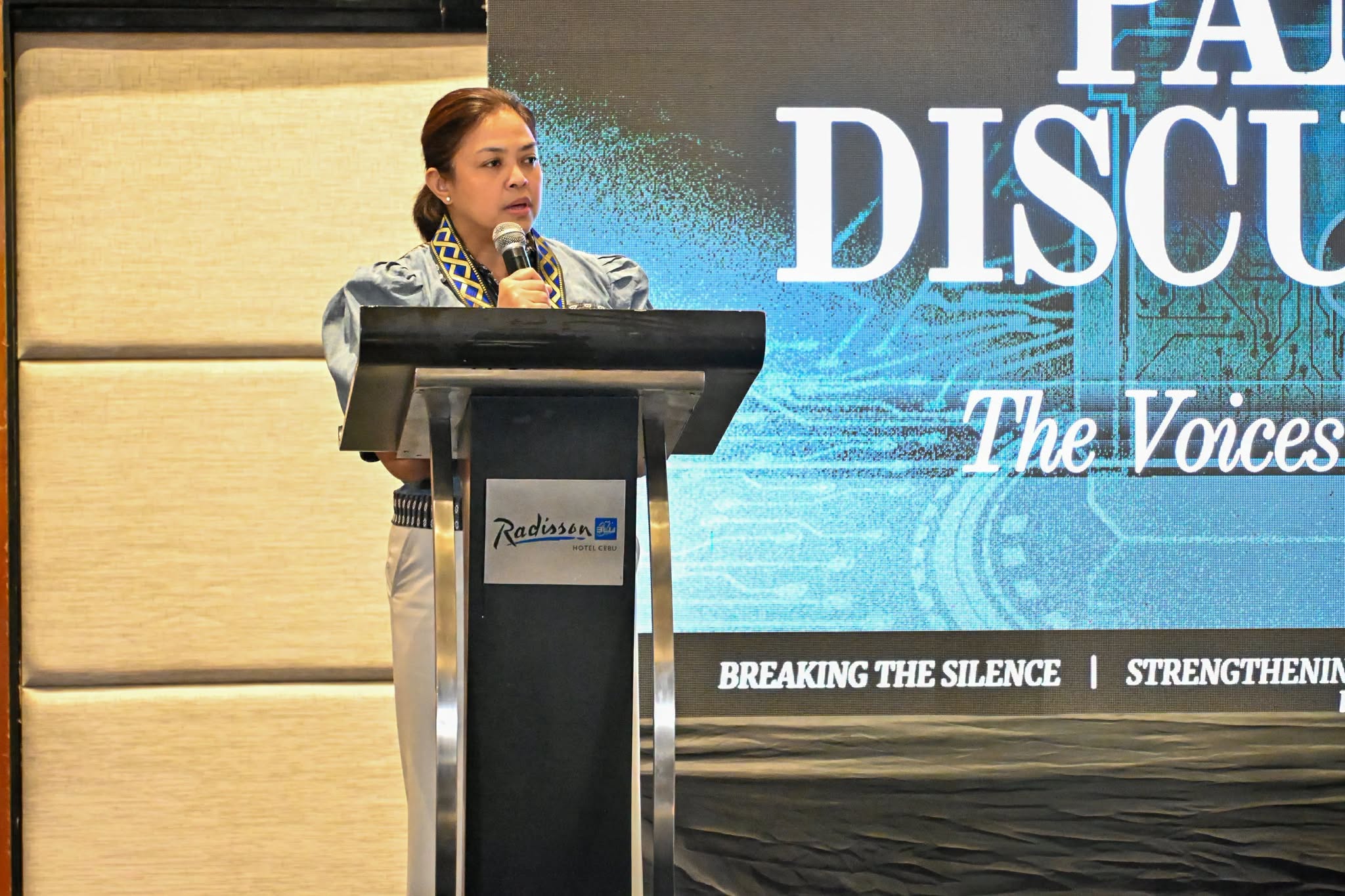
Philippine laws protecting children from online sexual exploitation need to keep pace with a rapidly changing digital environment, Cebu 3rd District Rep. Karen Hope Garcia said.
Garcia made the call during the launch of CyberShield Against Sexual Exploitation (CASE) at the Radisson Blu Cebu Hotel, where law enforcement personnel, local officials, advocates, social workers and parents gathered for discussions on child protection, justice and digital safety.
She cited figures showing that about 20 percent of Filipino internet users aged 12 to 17 have experienced some form of online sexual abuse or exploitation, which she estimated at about two million children.
“These children have already lived through it,” Garcia said, emphasizing that the figure refers to children who have experienced abuse, rather than those merely considered at risk.
Garcia said international child protection groups have identified the Philippines as a major hotspot for online sexual abuse and exploitation of children.
She said existing laws, including Republic Act 7610, the Anti-OSAEC Act and the Cybercrime Prevention Act, were enacted to protect children but were written for a different digital environment.
“Our laws have not kept pace with that internet,” Garcia said.
She said the gap becomes more urgent as digital platforms and algorithms influence what children see and encounter online, including through devices originally provided for education and communication.
Garcia filed House Bill No. 9448, or the Child Online Data Protection and Safety Amendment Act, earlier this year as part of efforts to strengthen safeguards for children online.
Under the proposed measure, children’s personal data would receive protections different from those applied to adults. Online platforms would be prohibited from using children’s data for targeted advertising or profiling and would need verifiable parental consent before collecting such information.
The bill would also make platforms accountable to the National Privacy Commission for violations.
Garcia, however, said legislation alone would not address the problem.
She called for adequate tools and funding for anti-cybercrime units and urged the courts to prevent cases involving child exploitation from being delayed by backlogs, particularly when survivors are waiting for cases to be resolved.
She also said too much of the responsibility for children’s online safety currently falls on children and parents who may not have been taught how digital platforms and online risks work.
Garcia said greater responsibility should be placed on online platforms that profit from children’s engagement and on offenders who can operate across national borders.
She thanked CASE convenor Winley Dela Fuente and the organizers for bringing together awareness, protection, justice and digital safety as interconnected parts of child protection.
Garcia said sympathy alone would not be enough to address online sexual exploitation.
“We often describe our children as the future of this nation. (But) they are equally the nation’s present, living at this very moment within a digital world we built without first asking whether it was safe for them,” she said.
Photo courtesy of Cong. PJ & Karen Garcia















Comments