



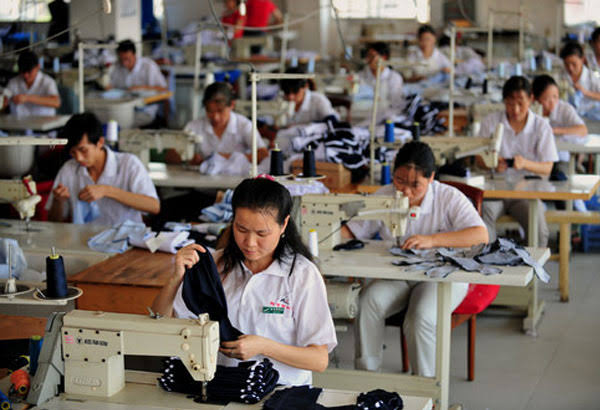
The P42 daily wage increase approved for Central Visayas has drawn opposition from the labor group Alyansa sa mga Mamumuo sa Sugbo-Kilusang Mayo Uno (AMA Sugbo-KMU), which said the adjustment remains insufficient to meet workers’ basic needs.
The National Wages and Productivity Commission (NWPC) affirmed the wage order of the Regional Tripartite Wages and Productivity Board 7 (RTWPB 7) on Sept. 26. The order raises the minimum wage to P582 per day in Class A areas and P542 in Class B areas beginning Oct. 14.
Class A covers the expanded Metro Cebu area from Carcar City in the south to Danao City in the north. Class B covers areas outside expanded Metro Cebu in Cebu province, as well as Bohol, Negros Oriental and Siquijor.
AMA Sugbo-KMU Chairperson Jaime Paglinawan described the P42 increase as too small to provide workers with a living wage. He said the new rates of P542 to P582 would remain far below the P755 daily minimum wage in the capital and would not keep pace with increasing prices of basic commodities, electricity and water.
The group said the purchasing power of workers had also declined, noting that P133.90 is now needed to buy what P100 could purchase in 2018.
AMA Sugbo-KMU cited Central Visayas’ high inflation and the cost of basic utilities as further reasons for a higher wage. The group said electricity costs P14.96 per kilowatt-hour, while water costs P259.16 per month for the first 10 cubic meters.
Paglinawan said the latest RTWPB 7 wage order failed to provide social justice to workers. He said the Philippine Constitution requires the state to ensure that both organized and unorganized workers receive a living wage, which the group identified as a P1,200 national minimum wage.
“Wala maghatag og katilingbanong hustisya ngadto sa mga mamumuo diin tin-aw man unta sa batakang balaod sa Pilipinas nga kinahanglang segurohon sa estado nga makadawat ang mga mamumuo, organisado ug dili organisado, sa makabuhing suholan,” he said.
(It does not provide social justice to workers, when the Philippine Constitution clearly states that the state must ensure that workers, organized and unorganized, receive a living wage)
The P42 increase is equivalent to about P1,092 more in monthly wages and is expected to benefit more than 300,000 minimum wage earners across the four provinces.
The wage-setting process included consultations and public hearings involving labor, management and other stakeholders.
RTWPB 7 conducted deliberations on Sept. 11, 12 and 14 before unanimously approving the wage increase.
The previous minimum wage ranged from P500 to P540 per day under Wage Order No. ROVII-26, which took effect on Oct. 4, 2025.
AMA Sugbo-KMU also cited Central Visayas’ economic growth in recent years, saying workers generated wealth worth P1.19 trillion in 2023, P1.28 trillion in 2024 and P1.32 trillion in 2025.
Paglinawan described the wage order as “inutil” or useless and said it should be junked.
“Kining maong wage order… nagpakita kini nga inutil ug angayan na nga ibasura. Kinahanglan na ang Kongreso ug Senado maoy motakda og balaodnon alang sa umento sa suholan nga makabuhi aron adunay dignidad ang atong mga mamumuo ng ang naghago, nagpanday sa ekononomiya sa nasud,” he said.
(This wage order has shown itself to be useless and should be junked. Congress and the Senate should enact legislation for a wage increase that provides a living wage and gives dignity to our workers who toil and build the nation’s economy.)
He called on Congress and the Senate to enact legislation providing a living wage, saying this would give dignity to workers who contribute to the country’s economy and generate products and profits for capitalists.
The new wage order is scheduled to take effect on Oct. 14, or 15 days after its publication on Sept. 28.
Domestic workers will also receive a separate increase, with their monthly minimum wage rising from P7,000 to P7,500.
Photo courtesy of PhilStar















Comments