



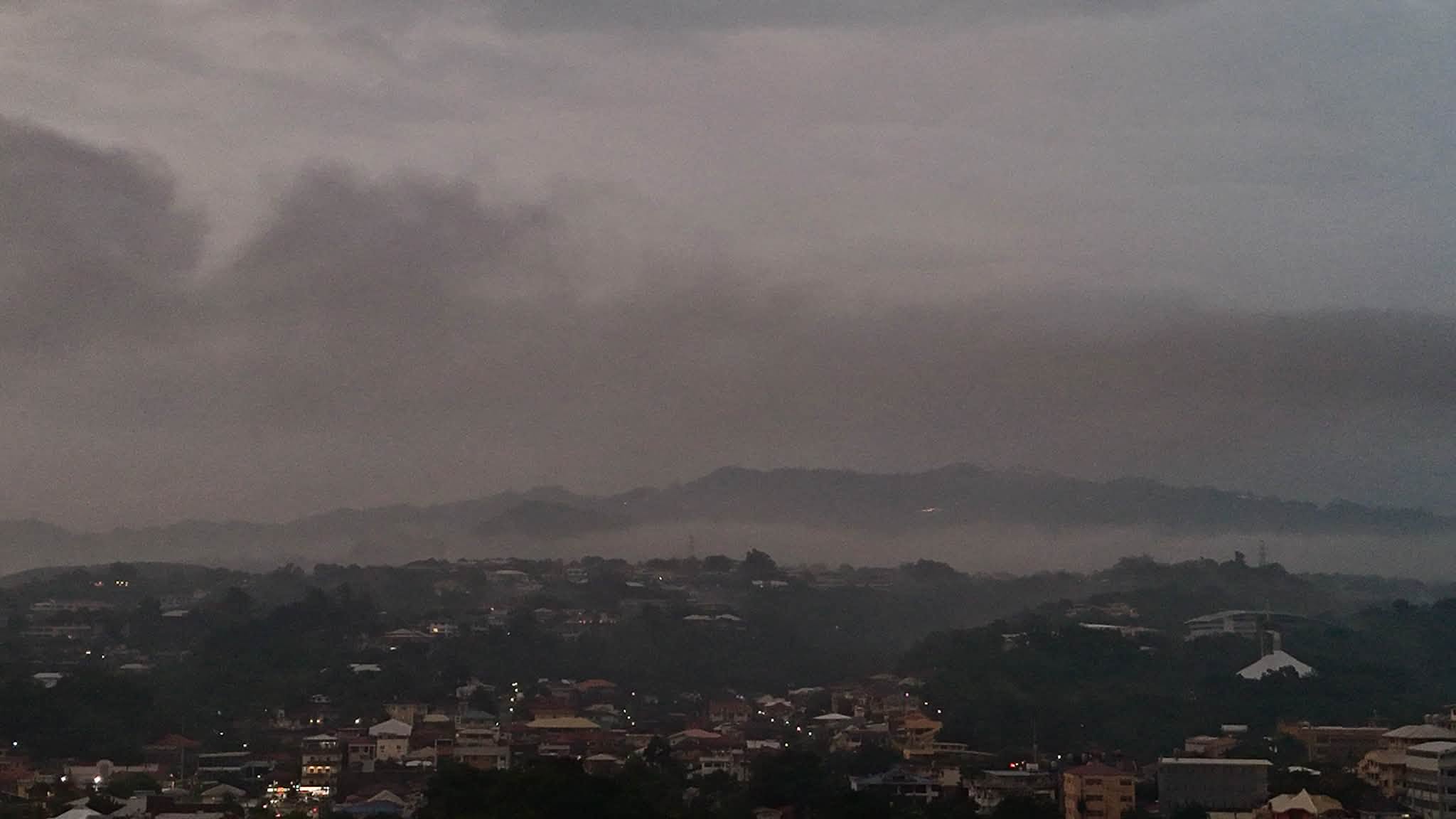
Metro Cebu’s air quality reached the “very unhealthy” level Wednesday, Oct. 7, as fine particulate matter remained elevated in the atmosphere.
The Department of Environment and Natural Resources-Environmental Management Bureau Central Visayas (DENR-EMB 7) recorded an Air Quality Index (AQI) of 157 at 11 a.m., placing conditions in the “very unhealthy” category.
The Metro Cebu monitoring station had earlier posted an AQI of 154 at 7 a.m. before the reading fell to 144 by 4 p.m. The afternoon reading placed air quality in the “unhealthy for sensitive groups” category.
The readings reflect elevated concentrations of PM2.5, fine particles small enough to penetrate deep into the respiratory system.
Under DENR-EMB guidance for “very unhealthy” air, pedestrians are advised to avoid areas with heavy traffic. People with heart or respiratory diseases, including asthma, are advised to stay indoors and rest as much as possible.
The public is also encouraged to postpone unnecessary trips and voluntarily reduce vehicle use while pollution levels remain elevated.
The latest readings came amid recurring haze episodes in Metro Cebu, which DENR-EMB 7 has linked to local emissions, stagnant atmospheric conditions and, at times, transboundary smoke haze.
The bureau previously reported that smoke from forest fires in Indonesia had contributed to elevated particulate levels in Metro Cebu. Its monitoring station in Talisay City, which represents Metro Cebu, also recorded “very unhealthy” PM2.5 levels during haze episodes in September.
Air quality can worsen when vehicle emissions, industrial activity, road dust and smoke from fires accumulate near the ground because of weak winds and limited atmospheric dispersion.
DENR-EMB 7 air quality specialist Arthur Niño Calupig has said wind direction and speed affect how haze moves and how pollutants become concentrated. Changes in wind conditions can therefore bring temporary improvement before air quality deteriorates again.
The bureau has also cautioned that a drop from a “very unhealthy” or “acutely unhealthy” reading does not automatically mean conditions have become safe, since PM2.5 concentrations can increase again when weather conditions favor the accumulation or transport of pollutants.
The Department of Health-Central Visayas has advised residents to limit outdoor exposure during periods of poor air quality.
People who need to go outdoors are advised to reduce their exposure and use well-fitted particulate-filtering masks, such as N95 or KN95 masks, particularly when pollution levels are elevated.
Children, older adults and people with existing respiratory conditions may be more vulnerable to the health effects of haze and elevated particulate pollution.
Residents are encouraged to monitor air quality updates from DENR-EMB 7 and avoid strenuous outdoor activities while pollution levels remain high.
Although the 4 p.m. AQI reading of 144 showed improvement from the morning levels, air quality remained “unhealthy for sensitive groups.”
Photo by Jacq Hernandez















Comments