



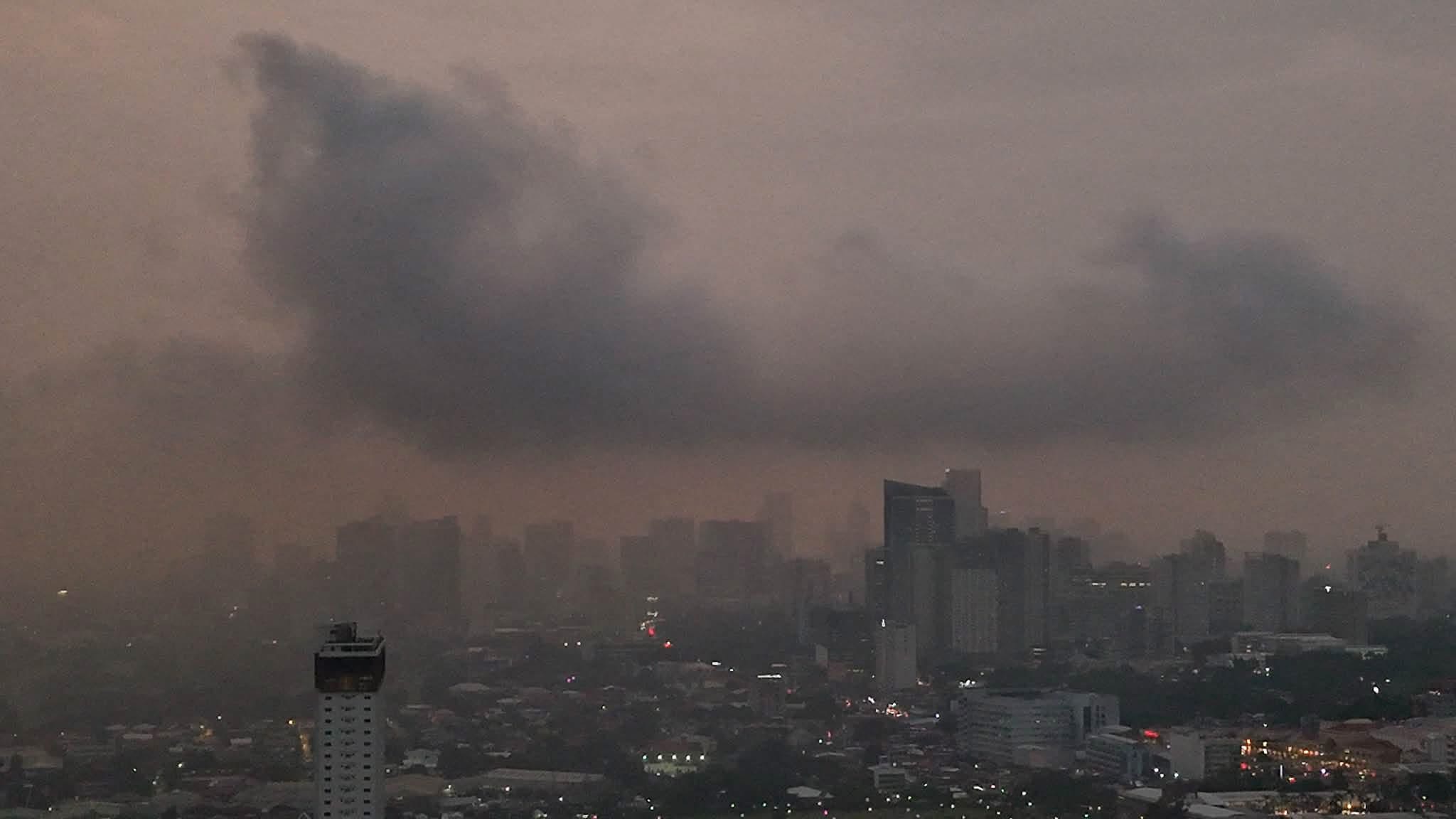
Local emissions and low temperatures, rather than transboundary pollution, drove Metro Cebu’s air quality to the “very unhealthy” category on Oct. 7, the Environmental Management Bureau 7 (EMB 7) said.
The Metro Cebu air quality station recorded an Air Quality Index (AQI) in the “very unhealthy” range for PM2.5 at 11 a.m. Wednesday, according to EMB 7’s air quality status update.
EMB 7 attributed the elevated fine particulate matter primarily to vehicle emissions, industrial operations and other local sources.
Low ambient temperatures, particularly from nighttime through early morning, also contributed to the suspension of fine particles in the atmosphere.
The bureau said current conditions should not be attributed to smoke haze from forest fires in Indonesia.
The Philippine Atmospheric, Geophysical and Astronomical Services Administration (PAGASA) 7 had officially declared the end of the southwest monsoon, or Habagat, as a high-pressure system strengthened over East Asia.
EMB 7 said the meteorological conditions, along with the absence of observed transboundary pollution patterns, supported its assessment that local sources were driving Metro Cebu’s current air quality.
Cold temperatures can also trap pollutants near the ground. EMB 7 said lower temperatures reduce the ability of warm air carrying pollutants to rise and disperse, allowing fine particulate matter to remain suspended in the atmosphere.
The bureau’s monitoring data showed a relationship between PM2.5 concentrations and ambient temperature, with higher PM2.5 levels recorded when temperatures were lower.
Meanwhile, PM10 concentrations remained within the guideline value of 150 micrograms per cubic meter.
However, EMB 7 noted a consistent increase in hourly PM10 concentrations from 4 p.m. to midnight from Oct. 1 to 7, a pattern also observed in PM2.5 levels.
EMB 7 said elevated PM2.5 concentrations could persist in the coming days because of continued local emissions and meteorological conditions favorable to pollutant accumulation.
Localized rain showers could help improve air quality by removing pollutants from the atmosphere.
The bureau said it had observed no pattern of transboundary pollution, particularly from Indonesian wildfires, as of its Oct. 7 assessment.
EMB 7 continued to advise the public to use appropriate masks, including N95 or KN95 masks, to reduce exposure to high concentrations of fine particulate matter.
Sensitive groups were advised to remain indoors and seek medical attention if an emergency arises.
Photo by Jacq Hernandez, PBB Photojournalist















Comments