



The Commission on Audit (COA) has questioned P193.59 million in Mandaue City’s 2025 Development Fund allocations, saying the lack of specific project details made it difficult to determine whether the proposed expenditures were ready for implementation.
In its audit report, COA said the city’s 20% Development Fund included broad spending categories without essential details such as project titles, locations, scope, implementation schedules and individual cost estimates.
The finding covered P193,594,864 allocated for 16 programs, projects and activities (PPAs) under the city’s 2025 Annual Investment Program.
Among the largest allocations were P52.5 million for poverty alleviation programs and Assistance to Individuals in Crisis Situations (AICS), P25 million for LED streetlights under the Kahayag Kontra Krimen program, and P22 million for six brand-new six-wheel garbage compactors.
The city also earmarked P19.62 million for road maintenance supplies, another P19.61 million under a separate allocation for the same purpose, P17.47 million for road and drainage improvements, and P16 million for street poles.
Other allocations included P9.95 million for consultancy services, P4 million for a brand-new mini dump truck and P3.9 million for aggregate supplies, alongside separate appropriations for additional aggregate, road maintenance and drainage maintenance supplies.
COA said these broad descriptions made the allocations appear to be lump-sum appropriations rather than clearly defined development projects included in the city’s approved local development and investment plans.
Without project-specific details, auditors said they could not readily establish whether the city had completed essential preparatory work, including project identification, feasibility assessments, detailed planning and costing.
Section 287 of Republic Act 7160, or the Local Government Code, requires local government units to allocate at least 20% of their annual National Tax Allotment for development projects.
COA also cited the law’s implementing rules and regulations, which require disbursements from special accounts of the general fund to be based on itemized appropriations for specific development projects or activities included in approved local development plans or public investment programs.
The audit team further cited a joint memorandum circular issued by the Department of Budget and Management, Department of Finance and Department of the Interior and Local Government on Nov. 4, 2020. The circular requires projects funded through the 20% Development Fund to be properly planned and ready for procurement and implementation.
COA warned that broad appropriations make it harder for stakeholders to identify the projects the city intends to undertake and monitor whether public money serves its intended purpose. Such an approach could also give administrators greater discretion to identify projects after the budget has been approved, weakening transparency and accountability.
The audit agency recommended that the city strengthen its planning and budgeting processes to ensure that Development Fund allocations correspond to well-prepared projects ready for implementation. The recommendation was coursed through the City Planning and Development Coordinator, City Budget Office and other concerned offices, committees and councils.
COA said the city management agreed with the recommendation.
**CITY EXPLAINS**
In an interview on Oct. 9, 2026, Mandaue City Administrator Atty. Gonzalo Malig-on acknowledged that some projects were not yet ready for implementation but described the current situation as an improvement over previous years.
Malig-on said the city’s Development Fund utilization rate had been between zero and 6% before Mayor Thadeo Jovito “Jonkie” Ouano assumed office.
“Karon, at least P193 million nga dili pa implementation-ready, but that’s a big improvement sa previous nga mga tuig,” Malig-on said.
He said the city was improving its preliminary planning processes and had formed a monitoring team to track the status of development projects.
“Imagine sa previous years, zero percent and six percent. Kasayang sa kwarta sa gobyerno, wala magamit para sa angay gamitan. At least karon, we have substantially improved. Naa pay kinahanglan i-improve, but we will do much better as the years unfold,” Malig-on said.
He explained that some projects encounter obstacles only when implementation begins, particularly when construction requires access through private properties or land with incomplete legal documentation.
“For example sa drainage, inig actual naa diay mu claim, naa pa diay portion nga wala ma document ang donation and usufruct agreement pero naggamit na for so long. So kung gamitan na og pondo sa gobyerno, mo strikto naman ta ana kay pangayoan man gyud nato og legal papers…dinha na mu arise ang problema,” Malig-on said.
For drainage and flood control projects, he added, the city sometimes needs permission to move heavy equipment, such as backhoes, through warehouses, roads or properties before work can proceed.
“Gusto magdali ang city, for example, kining drainage improvement, pero muagi pa og warehouse, muagi og fence. Unya dili man sad na pwede nga dili na planohan og aksyunan kutob sa mahimo, so naa gyud usahay nga dili ma-implement dayon within the year,” he said.
Malig-on said the city classifies the projects as capital outlay, allowing implementation to carry over into the following year when necessary.
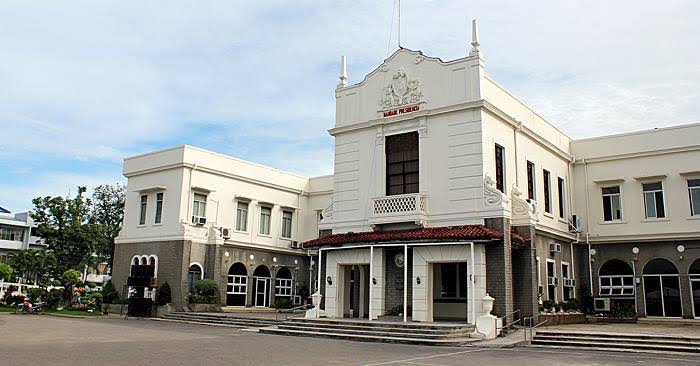
Photo courtesy of Mandaue LGU















Comments