



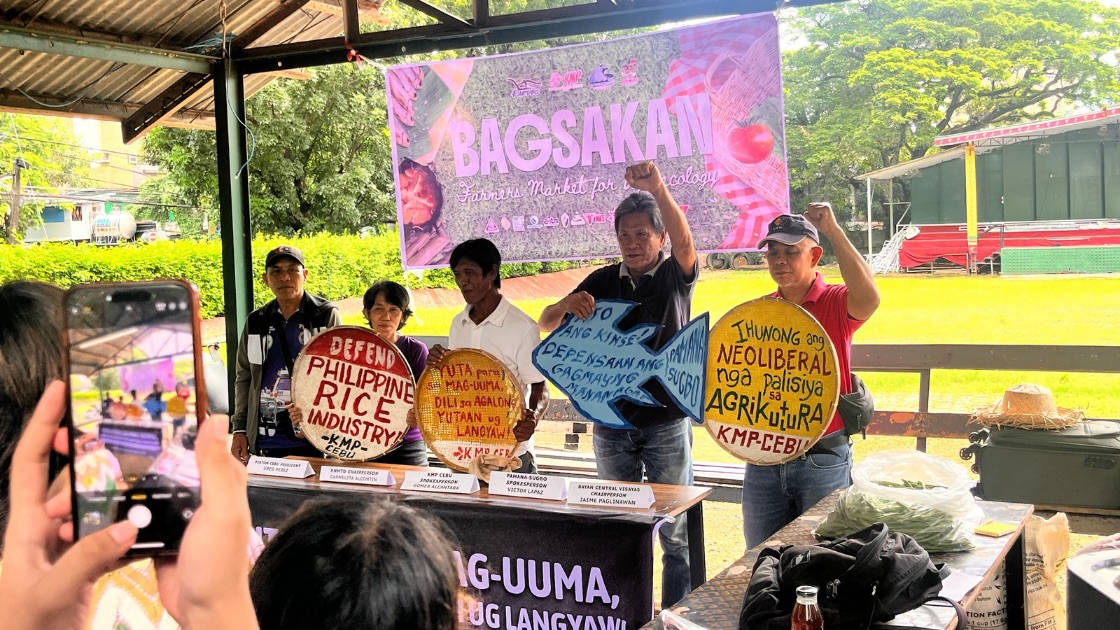
When the government told Filipinos to buy buckets for the coming Super El Niño, farmers in Taptap and Toledo were already watching their crops dry up. The Super El Niño is projected to intensify in the coming months and persist through the first half of 2027.
“Bumili na kayo ng balde para kapag umulan makokolekta na ninyo lahat,” President Marcos said.
For a household, a bucket may help for drinking and cooking. For a farmer with a hectare of dying crops, it barely makes a dent.
Farmers from the far mountain provinces of Cebu have expressed that when crops fail, the shortage reaches the market, and consumers feel it first in higher prices and thinner supply. Vegetables are expected to be hit hard by the Super El Niño because of potential water supply issues.
Gomer Alcantara of Taptap said what is lost in the field is also lost on the dinner table.
“Ang among mga produkto igo nalang namo ipakaon sa pamilya og kuwang paman gani,” he said.
For the farmers, the call for government help is about more than their own income. It is about keeping food available and affordable for everyone who depends on what they grow.
The strain reaches well beyond the farm. When harvests shrink, families in the city pay more for less, and the loss of farmland narrows the country’s future food supply.
A scorching hot season does not end where the fields end.
It moves through markets and household budgets, and it falls hardest on those with the least room to absorb it.
However, scarcity is only part of what weighs on them.
Peasant groups, including Kilusang Magbubukid ng Pilipinas (KMP) Cebu, have cited land grabbing and agricultural land-use conversion among the problems Cebu farmers face, on top of crop losses and falling incomes from Super El Niño.
For the farmers of Taptap, the problem is concrete.
They say the land they till was officially classified for agricultural use, yet ecotourism infrastructure has since been built on it. The farmers say this has shrunk the land they can plant at the very time the Super El Niño is cutting their harvests.
“Ang nahitabo man gud sa kabukiran, kasagaran sa among kaumahan pangtukoran og building,” Gomer said.
Each hectare turned into a building is a hectare that no longer grows food. The farmers lose their soil and their livelihood, while the wider public loses a share of what feeds it. In a year when water is scarce and food security is already a concern, that loss is felt far beyond the mountains.
They say they have asked for support from the local government, but the issue remains unresolved.
El Niño will pass, as most seasons do. The struggles of the farmers from mountain provinces will not pass with it. They were there before it, and they will remain after it unless someone listens.
It is easy to treat advice like “bumili ng balde” as a small, practical tip for those with a roof, a spare container and a sky to catch rain from. It looks different from a hillside where the soil is cracking and the farmland is being given over to buildings.
Communities like theirs rarely make the evening headlines, yet they grow the food of people who never see them.
Perhaps the lesson is not only about water. It is about whose hardship we notice and whose we overlook. Before solutions are handed out, we should ask who they were made for and who was left out of the conversation.
A bucket may catch the rain. It cannot catch the voices of those still waiting to be heard.
Get featured by messaging us through pbb.fyi/FeaturedStories and share your story from Cebu and beyond.















Comments