



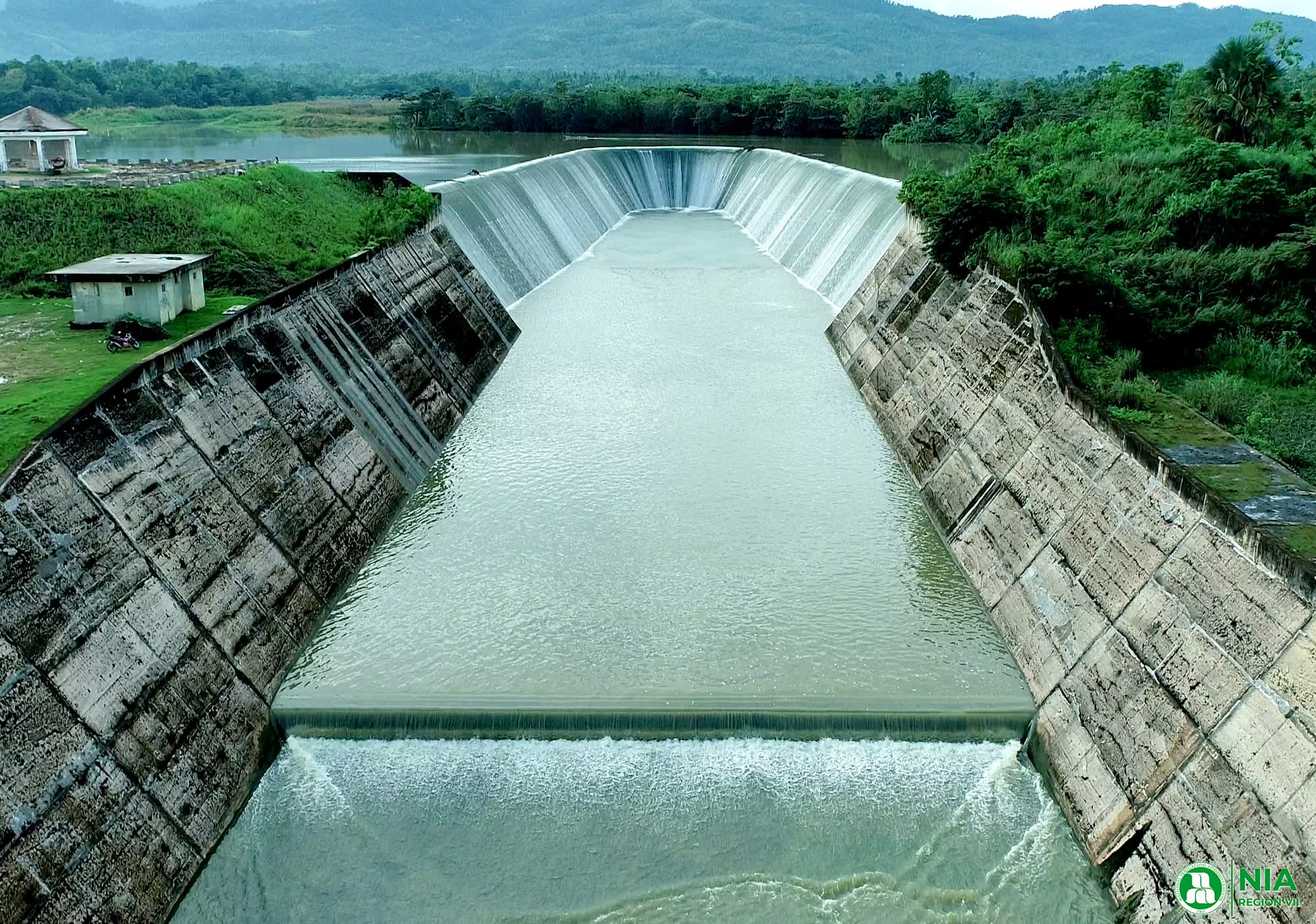
A P1.8-billion upgrade of the Malinao Dam in Bohol is expected to nearly double its water storage capacity to 9 million cubic meters, strengthening irrigation supply for 799 farmers and improving flood protection for downstream communities.
The National Irrigation Administration (NIA) is implementing the Malinao Dam Improvement Project (MDIP) to increase the capacity of the Malinao Irrigation System in Pilar, Bohol, and improve water management during both dry spells and heavy rainfall.
The project aims to raise the dam’s storage capacity from 5 million cubic meters to approximately 9 million cubic meters by modifying its existing bathtub spillway and constructing an auxiliary spillway.
Both spillways will have automated, controlled rubber weirs designed to raise their crests by up to two meters, allowing the reservoir to retain more water.
The expanded capacity is expected to improve irrigation for 740 hectares of farmland, particularly underserved areas at the ends of irrigation canals.
Malinao Irrigation System Head Felix Guioguio said the dam’s relatively small reservoir and years of siltation had limited its storage capacity since it began operating in 1996.
“Due to its relatively small reservoir and years of siltation since it began operating in 1996, Malinao Dam has limited storage capacity especially during dry season. During heavy rainfall, despite receiving substantial river inflows, excess water spills even as it diverts water to the integrated Bayongan and Capayas dams. With MDIP, we can strengthen our water management,” Guioguio said.
Beyond improving irrigation supply, the project is expected to help manage excess water during heavy rains and strengthen flood protection for communities downstream.
In 2023, the dam reached a critical high spill level, prompting safety advisories and evacuation measures for residents living near rivers.
The NIA is implementing the project under the leadership of Administrator Engr. Eddie G. Guillen, in line with the government’s push to provide farmers with more reliable irrigation systems.
As of Sept. 30, 2026, Phase 1 had reached 30% physical accomplishment, while Phase 2 stood at 13%. Both phases were ahead of schedule, with completion targeted in 2028.
Once finished, the improvements are expected to support more dependable water delivery to farming communities, improve the performance of integrated irrigation systems supplied by the dam, and enhance the safety and operational efficiency of the water infrastructure.















Comments