



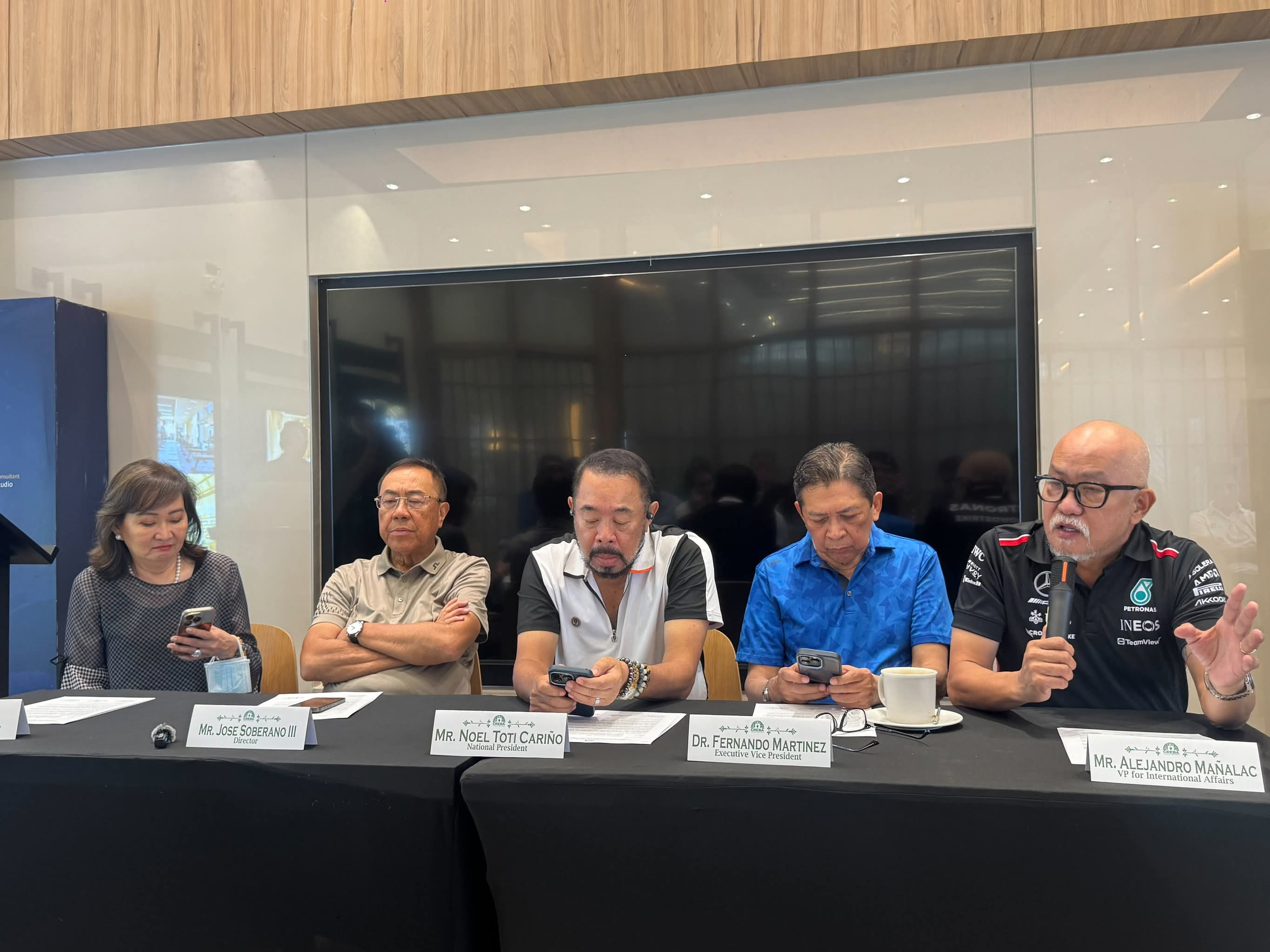
Real estate developers are proposing to help subsidize homebuyers’ loan payments instead of directly building socialized housing units, arguing that the alternative could assist more low-income families while easing compliance costs for the industry.
The Chamber of Real Estate and Builders’ Associations Inc. (CREBA) is seeking an interest subsidy program through the Pag-IBIG Fund, alongside changes to balanced housing requirements and rules governing preselling proceeds held in escrow.
CREBA President Noel “Toti” Cariño presented the proposals during a press conference on Wednesday, Oct. 21, as hundreds of developers and industry stakeholders gathered in Cebu for the organization’s three-day national convention.
Under the proposed Direct Beneficiary Interest Subsidy Program, developers would make nonrecoverable contributions to the Pag-IBIG Fund, which would administer interest subsidies for qualified socialized housing borrowers.
Cariño said one illustrative arrangement could lower monthly amortization payments from about P4,800 to P2,800.
Another proposal would provide assistance of about P805 per family monthly for five years, equivalent to P48,300, potentially reducing monthly payments under the assumed housing package to around P3,200.
CREBA has submitted the proposals to the Department of Human Settlements and Urban Development (DHSUD), Pag-IBIG Fund and the Office of the President.
CREBA is also seeking changes to balanced housing requirements under Republic Act 7279, or the Urban Development and Housing Act of 1992, as amended by Republic Act 10884.
The law requires subdivision developers to meet a balanced housing obligation equivalent to at least 15% of the total subdivision area or project cost. Condominium developers face a requirement equivalent to at least 5% of the condominium area or project cost.
The group said high land and construction costs, combined with price ceilings for socialized housing, make compliance difficult for some developers. It also questioned the practicality of building units in locations where demand may be insufficient.
Under its proposal, eligible developers could contribute to the interest subsidy program instead of directly producing socialized housing units, subject to government approval and oversight.
In an illustrative comparison, CREBA said a P15-million contribution from a hypothetical P1-billion subdivision project could assist about 310 families, compared with 157 housing units under the existing 15% production benchmark.
The proposal would shift part of the compliance approach toward helping qualified buyers afford housing loans rather than requiring developers to produce a specified number of units.
CREBA is separately asking DHSUD to review requirements for developers operating under temporary licenses to sell (TLS) to place preselling proceeds in escrow accounts.
Cariño questioned the restrictions on accessing these funds, saying developers rely on preselling proceeds to finance construction.
The escrow requirement is intended to protect buyers by providing a means to refund their payments if a temporary license is not subsequently replaced by a regular license to sell.
CREBA proposed allowing controlled disbursements from escrow accounts for the projects that generated the funds. The proposed arrangement would be subject to bank and DHSUD monitoring, as well as verification of construction milestones and engineering accomplishments.
The organization also raised concerns about the possible retroactive reassessment of balanced housing compliance deficiencies following Department of Justice Opinion No. 04, series of 2026.
CREBA said the expiration of a moratorium in February 2027 could lead to reassessments involving projects dating back to 2017, including developments that had already secured licenses to sell.
It recommended exempting projects covered by agreements executed with the former Housing and Land Use Regulatory Board or DHSUD before the DOJ issued its opinion on Feb. 3, 2026.
The group argued that developers who complied in good faith with the rules in effect when they signed their agreements should not face substantially higher obligations because of a subsequent policy interpretation.
CREBA has submitted its objections to DHSUD and is awaiting the department’s response.
CREBA convention chair Jose Soberano III called for closer cooperation between the government and private sector to expand affordable housing.
Soberano said government housing agencies and local government units should take a more active role in providing homes for the poorest families, including through rental and rent-to-own programs.
He said private developers could increase housing production for households capable of paying through financing if the government provided appropriate mechanisms and incentives.
CREBA also cited DHSUD initiatives to strengthen the Expanded Pambansang Pabahay para sa Pilipino (4PH) Program, streamline permitting, establish one-stop shops and expand digitalization.
The group welcomed adjustments to socialized housing price ceilings, including up to P950,000 for subdivision house-and-lot packages and P1.8 million for condominiums. It also cited collaboration between DHSUD and Pag-IBIG to address condominium inventory priced below P3 million.
The convention brought together developers, contractors, suppliers and other industry stakeholders to discuss housing policies, regulatory challenges and investment opportunities.
CREBA said housing policies should consider not only the construction of units but also residents’ access to jobs, transportation, schools, infrastructure and essential services.
The organization said it aims to work with the government on regulations that protect homebuyers while encouraging investment and expanding access to affordable housing.
Photo by Kaiser Jan Fuentes















Comments