



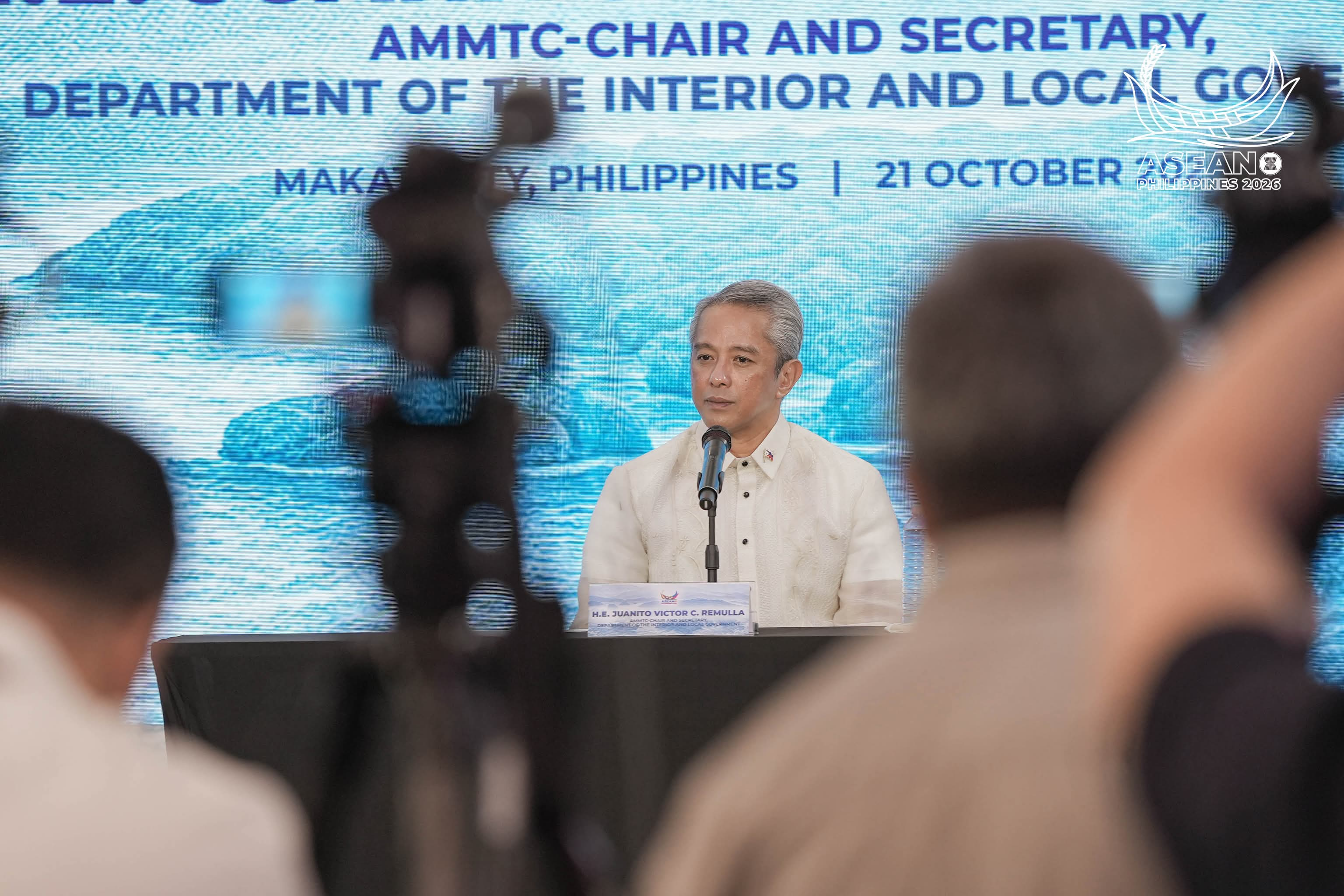
Intelligence sharing among Southeast Asian countries is crucial to disrupting cross-border crime, Department of the Interior and Local Government (DILG) Secretary Jonvic Remulla said, citing a P3.54-billion methamphetamine seizure in Laos that helped prevent the shipment from reaching the Philippines.
Remulla made the statement Wednesday during a press briefing following the ASEAN Plus Three Ministerial Meeting on Transnational Crime (AMMTC + 3), where he stressed that the region’s efforts against transnational crime depend on the timely exchange of information among member states.
“We share information. What is important is the intelligence sharing, and I give credit to all the ASEAN nations for being very active in that area,” said Remulla, who served as chair of the ASEAN Ministerial Meeting on Transnational Crime.
Laotian authorities intercepted the methamphetamine shipment earlier this month after Philippine law enforcement agencies received initial intelligence about the consignment weeks before the seizure.
Remulla said the operation demonstrated how information shared across borders could help authorities prevent illegal drugs from entering their intended destinations.
“[This] is what we want to make routine across ASEAN: faster intelligence sharing, joint operations, and better-equipped people on the front line,” he said.
He added that cooperation among ASEAN member states had strengthened as countries faced common security threats and worked together to develop more effective responses.
“The level of cooperation between all member-states is now greater than ever. Everyone faces the same problem. So, everyone is collaborating in order to find better solutions to stop this,” Remulla said.
The Philippines concluded its term as AMMTC chair and handed over the chairmanship to Singapore, with Remulla highlighting the regional initiatives advanced during the country’s tenure.
These included an ASEAN declaration aimed at upholding safeguards for children against online sexual abuse and exploitation.
The Philippines also helped advance a joint statement with ASEAN’s Plus Three partners, China, Japan and South Korea, outlining actions to address human trafficking, terrorism, cybercrime and other transnational threats.
Remulla’s remarks underscored the role of regional coordination in addressing criminal operations that cross national borders and require authorities to share intelligence and coordinate enforcement efforts.















Comments