



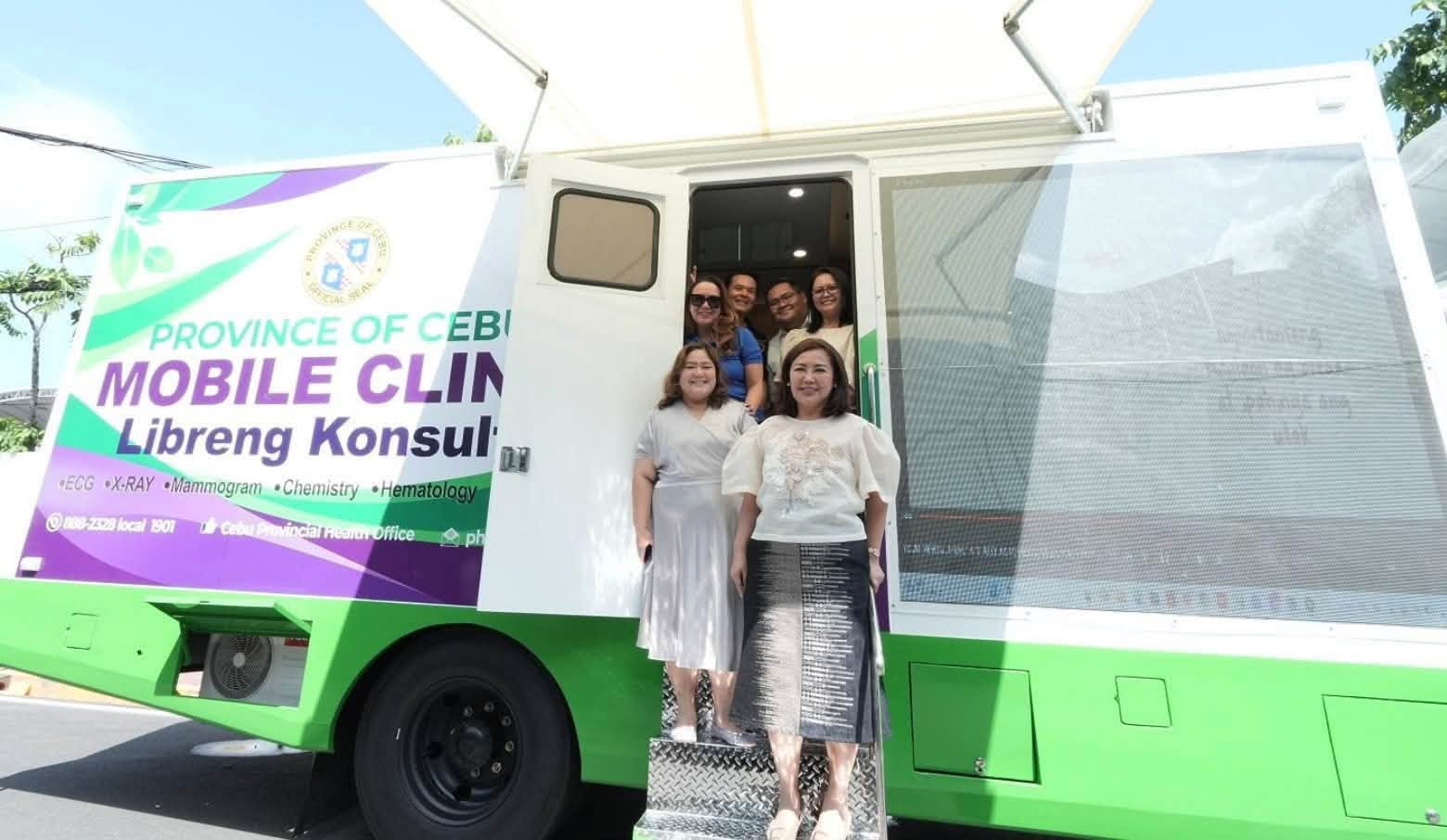
Residents in remote and underserved communities in Cebu may gain easier access to diagnostic services as the provincial government prepares to deploy a mobile clinic equipped with laboratory and imaging facilities, including a mammography machine.
The 20-foot mobile unit is the first of its kind acquired under the administration of Gov. Pamela Baricuatro, according to Capitol health consultant Dr. Nikki Catalan-Vizcayno.
The clinic combines several diagnostic services in one vehicle, including chest X-ray, ultrasound, electrocardiogram (ECG) and mammography, as well as automated analyzers for blood chemistry and hematology tests.
The blood chemistry analyzer can conduct various laboratory tests, while the five-part hematology analyzer examines blood counts and differentiates types of white blood cells. These tests help healthcare professionals assess patients and determine whether further examinations or treatment are needed.
The mammography machine allows healthcare personnel to examine breast tissue for abnormalities that may require additional medical evaluation.
Catalan-Vizcayno highlighted the combination of diagnostic equipment, noting that mobile clinics in the country do not commonly bring laboratory testing, imaging and mammography services together in one unit.
The provincial government intends to use the mobile clinic to address barriers that prevent residents from obtaining medical examinations, particularly transportation costs and the distance between their communities and healthcare facilities.
Residents of geographically isolated municipalities often need to travel to larger towns or urban centers to access specialized diagnostic services. Bringing these services closer could make initial assessments and recommended tests more accessible.
The clinic’s reach will depend on its deployment schedule, the communities it serves and the availability of trained personnel to operate its equipment and assist patients.
The provincial government plans to coordinate with municipal governments and local health teams to identify deployment areas, prioritizing communities with greater difficulties accessing healthcare.
Local coordination will also help connect patients to appropriate services after their examinations, including referrals for further testing or treatment when necessary.
The initiative also seeks to facilitate residents’ registration under PhilHealth’s YAKAP program, which provides access to primary healthcare services through participating providers.
Through the initiative, the provincial government aims to link more residents to continuing healthcare services rather than limiting assistance to one-time medical outreach activities.
Catalan-Vizcayno emphasized the importance of reducing barriers to healthcare, saying, “Where a person lives, or how much it costs to travel, should not determine whether they can access essential healthcare.”
She added that bringing services closer to communities could support earlier assessments, timely testing and appropriate referrals.
📷 Capitol PIO / Facebook















Comments