



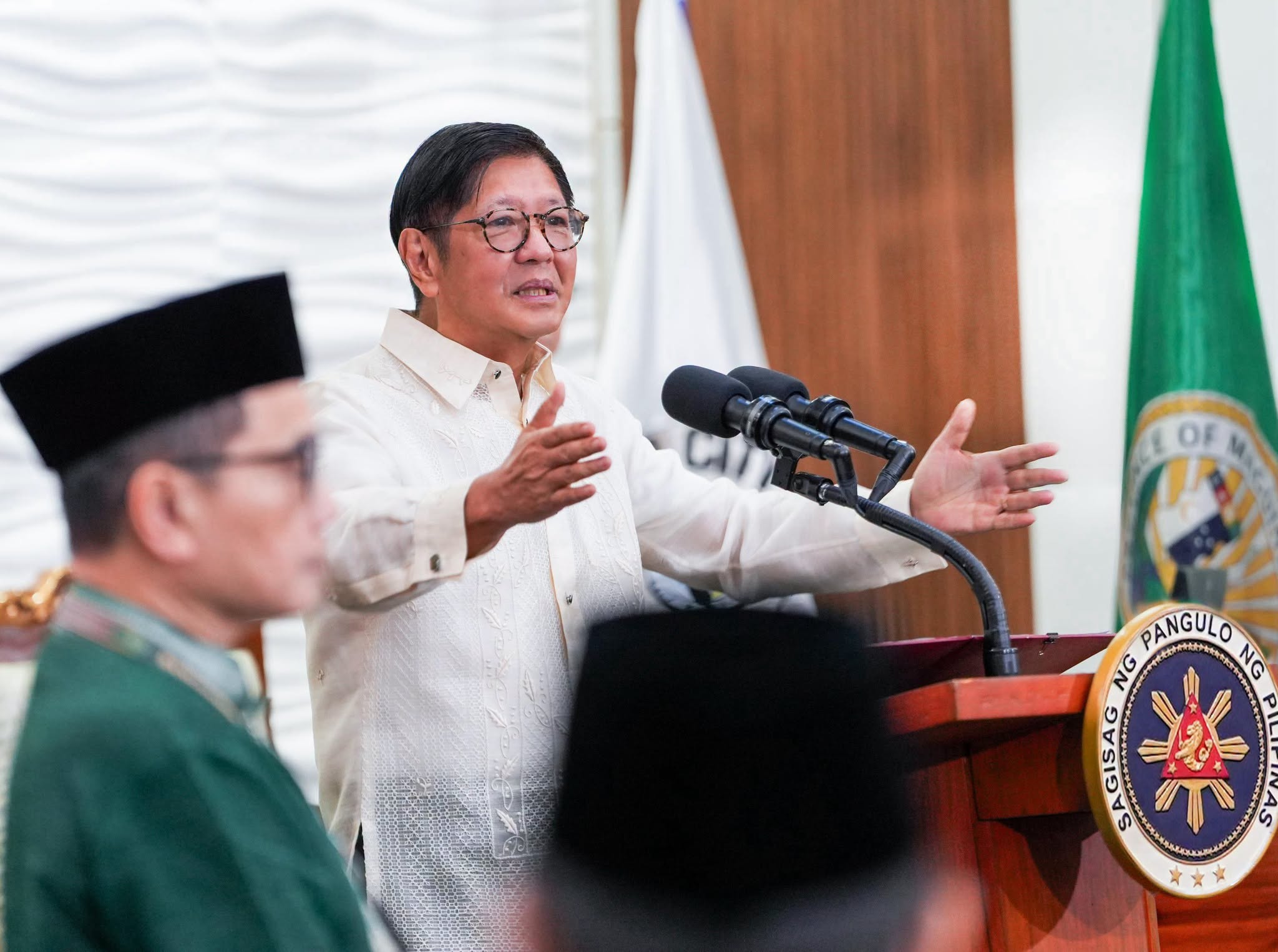
President Ferdinand Marcos Jr. pushed initiatives on agricultural productivity, infrastructure development, investments and institutional reforms through a series of engagements across the country this week.
The activities included the inauguration of irrigation projects in Ifugao and Cagayan, the opening of a new expressway section in Metro Manila, and discussions on renewable energy, electric vehicle manufacturing, correctional reforms and regional governance.
Marcos on Monday inaugurated the Alfonso Lista Pump Irrigation System in Barangay Sto. Domingo, Alfonso Lista, Ifugao, underscoring the need for reliable water supplies to improve farm production and support farmers’ livelihoods.
He called for stronger cooperation among government agencies, local government units and farmers’ cooperatives to advance agricultural development and food security, particularly as the country prepares for the anticipated effects of a strong El Niño.
In Cagayan, he inaugurated the Pamplona Solar Pump Irrigation Project in Barangay Gattu, which is expected to provide water to more than 600 hectares of farmland, including an additional 100 hectares.
The solar-powered facility could allow farmers in some areas to increase their cropping cycles from one to two per year while reducing operating costs by replacing diesel-powered pumps.
The President also visited the Integrated Remote Operations Center of SN Aboitiz Power-Magat Inc. in Ramon, Isabela, where he received a briefing on the proposed Magat Floating Solar Power Project.
The project aims to expand renewable energy generation while reducing water evaporation from the Magat Reservoir. It is expected to supply electricity to around 42,000 households and generate additional revenue for the National Irrigation Administration to support irrigation services.
On infrastructure, Marcos inaugurated and inspected the two-kilometer North Luzon Expressway (NLEX)-C5 Northlink Segment 8.2 Section 1A on Thursday.
The new section connects Quirino Highway to the NLEX Mindanao Toll Plaza and is expected to reduce travel time from about 40 minutes to five minutes for nearly 11,000 motorists daily.
It provides direct access to the NLEX Connector for motorists coming from Quirino Highway, offering routes to Manila, the University Belt and nearby cities. It also serves as an alternative to EDSA and connects northbound motorists to Central and Northern Luzon.
Marcos announced that motorists could use the new section free of charge until the end of the year.
He also disclosed a planned P120 billion investment by the MPC Group of Companies and the SMC Group for an elevated road connecting Balintawak to Bocaue.
The President received an update on the Metro Manila Subway Project Depot in Barangay Ugong. Its P143 billion Contract Package 101 covers the depot, underground tunnels and four stations: East Valenzuela, Quirino Highway, Tandang Sora and North Avenue.
Marcos also highlighted foreign investments in local manufacturing during his visit to the newly inaugurated plant of Sazgar Philippines Inc. in Biñan City, Laguna.
He described the investment as a vote of confidence in the country and an opportunity to expand the Philippines’ role in electric vehicle manufacturing.
He encouraged the company to develop its local supply chain, noting that it still sources many components from abroad. He also reaffirmed the government’s support for the industry through the implementation of the Electric Vehicle Industry Development Act.
On correctional reforms, Marcos led the observance of the 32nd National Correctional Consciousness Week at the New Bilibid Prison Reservation in Muntinlupa City on Wednesday.
He met persons deprived of liberty (PDLs), including elderly inmates, and observed rehabilitation programs intended to develop practical skills and prepare them for reintegration into society.
He reiterated his directive to the Department of Justice to improve correctional facilities, strengthen access to legal assistance and expedite the release of inmates who have completed their sentences and are legally eligible for discharge.
Marcos and First Lady Liza Araneta-Marcos also hosted nearly 160 newly appointed first- and second-level court judges at Malacañan Palace on Monday.
He congratulated the judges and urged them to uphold impartiality, accountability and professionalism in administering justice.
In Mindanao, the President attended the inaugural session of the Bangsamoro Autonomous Region in Muslim Mindanao (BARMM) Parliament in Cotabato City on Friday.
The session marked the start of regular parliamentary governance following the region’s Sept. 14 parliamentary elections, which selected 80 members.
The Parliament is expected to enact regional laws, approve public spending and oversee government programs, succeeding more than seven years of administration under the Bangsamoro Transition Authority.
Under Republic Act 11054, or the Bangsamoro Organic Law, the Parliament will elect the Chief Minister through a majority vote of at least 41 members. The Chief Minister will lead the regional government under parliamentary oversight.
Marcos also pursued diplomatic engagements, receiving the credentials of non-resident ambassadors from Jordan, Chad, Fiji and Burundi at Malacañan on Tuesday.
Their accreditation is expected to open opportunities for cooperation in trade, investments, tourism, education and people-to-people exchanges.
The President also received Sri Lankan Ambassador Dr. Chanaka Harsha Talpahewa for a farewell call on Wednesday, recognizing his contributions to bilateral relations.
On Thursday, Marcos and the First Lady attended the Michelin Guide Ceremony of Manila and Environs at the Marriott Hotel in Pasay City.
The ceremony recognized restaurants through Michelin Stars and Bib Gourmand distinctions, highlighting Filipino chefs and the country’s culinary industry. The guide returned to the Philippines for its second edition as part of efforts to promote the country as an international culinary destination.
The engagements formed part of the administration’s Bagong Pilipinas agenda, which seeks to build a resilient, competitive and inclusive country and extend the benefits of development to more Filipinos.
📷 Bongbong Marcos / Facebook















Comments