



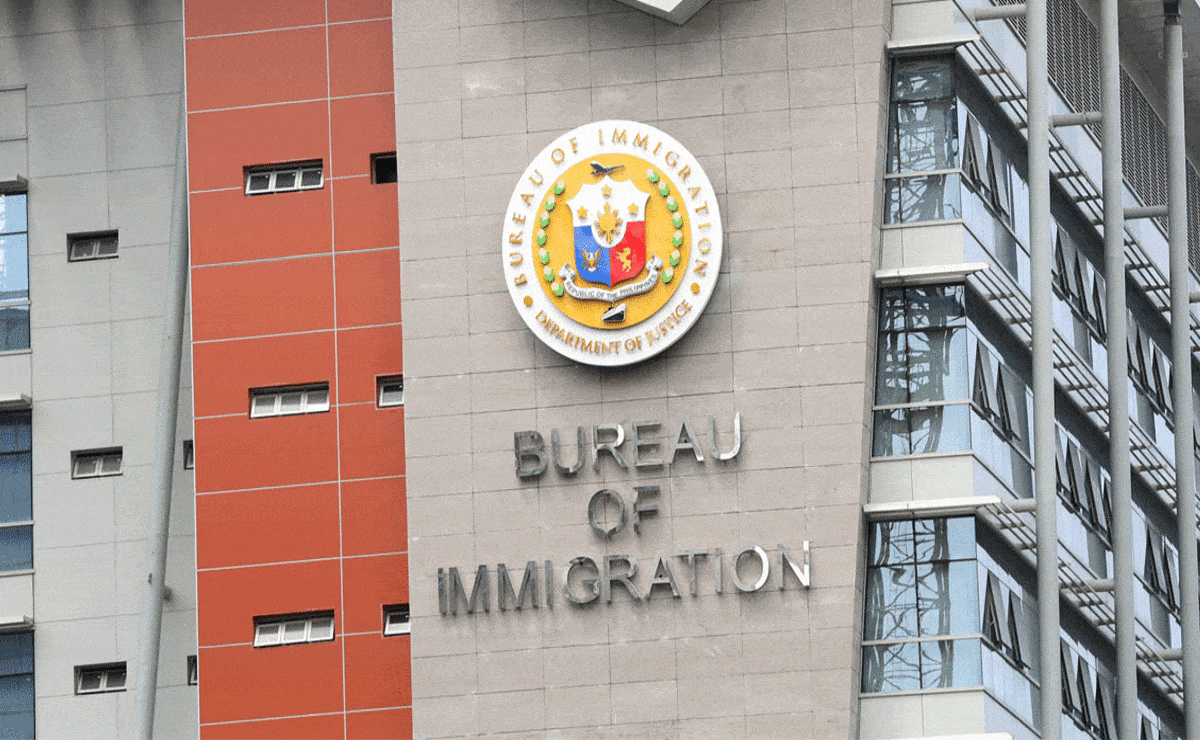
The Bureau of Immigration (BI) wants a system that would automatically flag foreign nationals who obtain Philippine birth certificates under Filipino identities, following a Senate inquiry that exposed gaps in government agencies’ verification of personal records.
BI Deputy Commissioner Joel Alejandro Nacnac said the bureau is seeking stronger legal authority, funding and technology to connect government databases and compare biometric records across agencies.
He raised the proposal during a Senate Committee on Justice and Human Rights hearing chaired by Sen. Risa Hontiveros, where lawmakers examined how foreign nationals could use questionable civil registry documents to establish Filipino identities.
“We have a pending proposal for the modernization bill for the Bureau of Immigration,” Nacnac said, suggesting that provisions allowing interagency biometric verification be included in the proposed measure.
He said the BI is also studying technological solutions to integrate information held by different government agencies but would need additional resources and authority to establish the system.
Nacnac admitted that the government currently has no automatic mechanism to detect foreign nationals who later obtain Philippine birth certificates under Filipino identities.
“As of this time, unfortunately, wala po (there is none),” he said when asked whether such a system was already in place.
The BI can compare fingerprints with its existing database, but it can only do so when another government agency requests verification or submits biometric samples, Nacnac explained.
The issue surfaced in the case of businessman Joseph Cue Sy, whose fingerprints the BI confirmed matched those of Chinese national Chen Zhong Zhen.
Immigration records showed that Chen applied for a returning resident visa in 1989 and later registered under the Alien Social Integration Program in 1996.
Sy, however, obtained a Philippine birth certificate through late registration in 2007, when he was already 41 years old.
Authorities discovered the discrepancy only in 2025, after intelligence officials asked the BI to compare the fingerprints linked to the two identities.
Hontiveros questioned why the conflicting records remained undetected for decades despite the government’s possession of biometric information.
She said the case exposed weaknesses in coordination among the BI, Philippine Statistics Authority, National Bureau of Investigation and other agencies responsible for checking and validating identities.
“Hindi puwedeng mas mabilis gumawa ng questionable identity kaysa mag-correct ng questionable identity ang gobyerno (The government should not be slower at correcting questionable identities than creating them),” Hontiveros said.
The senator proposed a secure biometric verification mechanism that would automatically identify possible matches between foreign nationals listed in immigration records and individuals subsequently registered as Filipino citizens.
Nacnac agreed that such a system could help prevent similar cases, noting that the BI already has the technical capability to compare fingerprints once other agencies provide the necessary records.
Hontiveros directed the bureau to submit its proposed technological and legislative requirements for inclusion in the committee’s recommendations.
She stressed that fraudulent Filipino identities could have consequences beyond inaccurate government records because Philippine birth certificates may be used to obtain passports, acquire land, establish businesses and access other privileges reserved for Filipino citizens.
The Senate inquiry also looked into how Sy, despite questions surrounding his citizenship documents, became chairman of a major mining company and gained admission to the Philippine Coast Guard Auxiliary.
Hontiveros said the committee would pursue both administrative and legislative reforms to prevent questionable civil registry documents from being used to establish Filipino identities across government institutions.
📷 Inquirer.net















Comments