



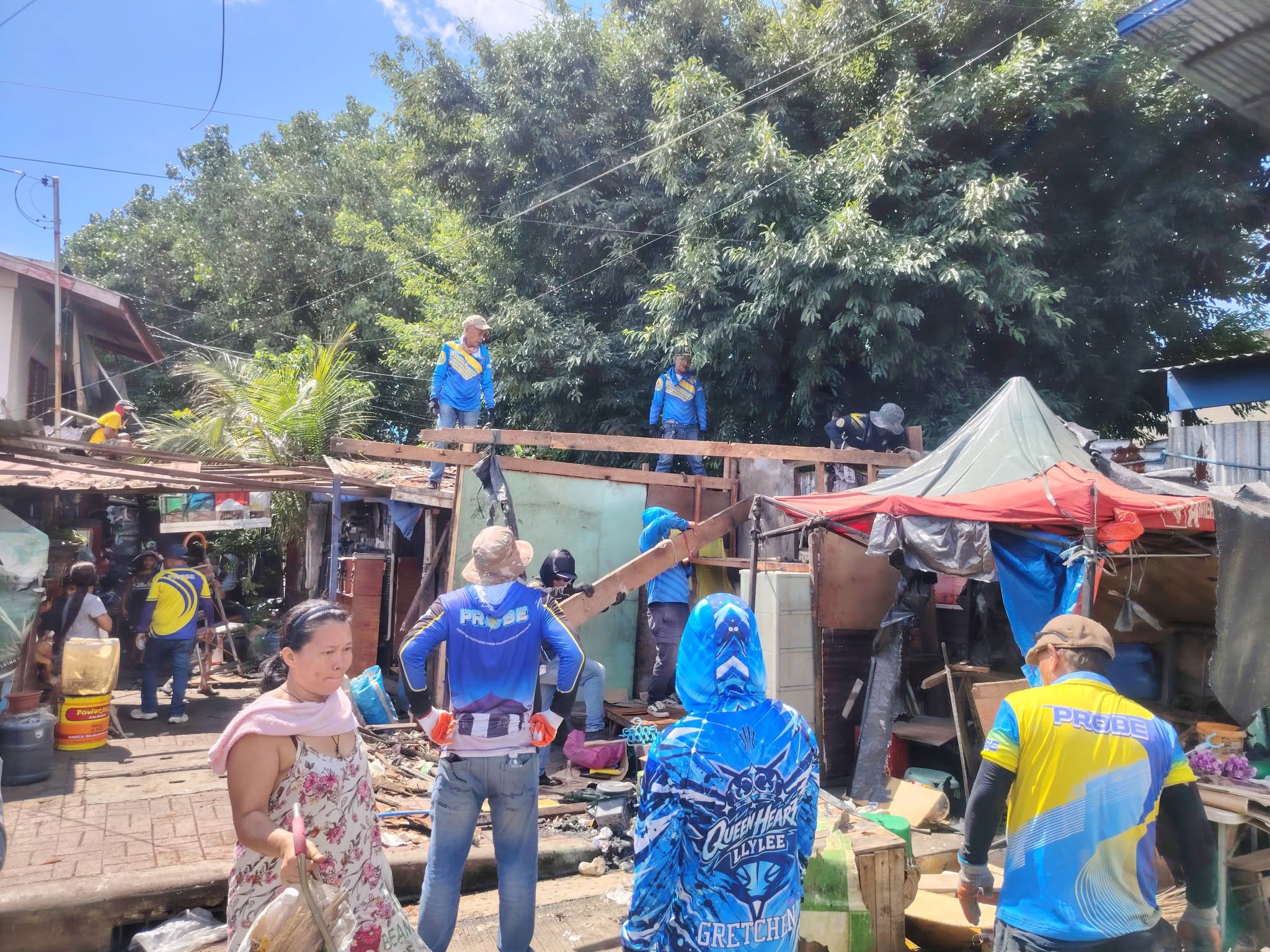
Twenty-three households in Barangay Ermita are dismantling their houses to make way for the clearing of a clogged drainage culvert blamed for recurring floods in parts of downtown Cebu City.
Mayor Nestor Archival said the clearing operation in Sitio Bato would allow heavy equipment to remove accumulated silt and garbage from the drainage structure, which has restricted stormwater flow toward its outlet.
The city is providing P20,000 in financial assistance to each of the 23 affected families.
Structures built directly above the culvert have left little room for water to flow through the drainage facility, contributing to flooding along Leon Kilat Street and nearby areas, including the stretch from the University of Cebu and E-Mall toward Cebu City Hall and Colon Street.
“Even if we keep pumping the water out, the flooding just keeps coming back,” Archival said.
An inspection by the Department of Engineering and Public Works (DEPW), coordinated with the Department of Public Works and Highways (DPWH), traced the problem to a large culvert in Ermita buried under accumulated mud.
Archival said the drainage structure is about two meters deep and requires heavy equipment for desilting. The city first needed to clear the houses occupying the area above it to provide access.
He said the city consulted affected residents and Barangay Ermita officials before starting the operation. The families agreed to dismantle their structures and signed documents authorizing the city to recover the area.
“It took time, but at least after so many years, we have finally found a way to address this,” Archival said.
Barangay Captain Mark Miral said some of the affected families had lived in Sitio Bato for years, including residents who remained after a fire hit the community in 2019. Subsequent construction and recovery efforts were also disrupted by the COVID-19 pandemic.
The barangay and city government held several meetings and assessments to identify households directly affected by the project.
The Department of Social Welfare and Services (DSWS) and Department of Urban Poor (DUP) also helped assess the families eligible for assistance.
Miral clarified that the current arrangement covers financial assistance but does not include a confirmed relocation site.
“For now, there is no relocation. We are providing [financial] assistance,” he said.
The barangay has also identified five to six additional extended household structures that may require assistance because their removal could affect portions of the main houses. The city and barangay are still working out their eligibility and assistance arrangements.
Archival said residents were expected to finish dismantling their houses by Nov. 4 or 5, after which city equipment could enter the site and begin the drainage work. At the time of the interview, around 15% to 20% of the clearing had been completed.
Miral said the city, barangay and affected residents signed a memorandum of agreement to prevent the cleared area from being occupied again.
The barangay plans to assign tanods to monitor the site and install solar lighting to help secure the area.
“We will clear the area as much as possible and have the barangay tanods monitor it,” Miral said.
Archival identified Sitio Bukog in Barangay T. Padilla as another priority for drainage inspection and clearing. He said water accumulates behind a market there because a drainage outlet leading to a river appears to have been obstructed by sheet piles installed as part of a DPWH project.
The city is also looking into drainage concerns along Manalili Street, where preliminary discussions have been held with establishments built near or over waterways.
Archival acknowledged that some business owners may resist changes but said the city would explore arrangements that would encourage their cooperation in addressing flooding without immediately demolishing existing structures.
He stressed the need to resolve drainage problems before the rainy season, when continued rainfall could complicate clearing and repair work.
The Ermita operation forms part of the city’s broader effort to remove obstructions from waterways and improve drainage in flood-prone communities.
The Cebu City 3-Meter Easement Recovery Task Force, recently established by the city, is tasked with identifying and documenting structures and other obstructions encroaching on waterways.
Under the Water Code of the Philippines, urban waterways must maintain a three-meter easement along river and stream banks for public use.
📷 Office of the City Markets - Cebu City















Comments