



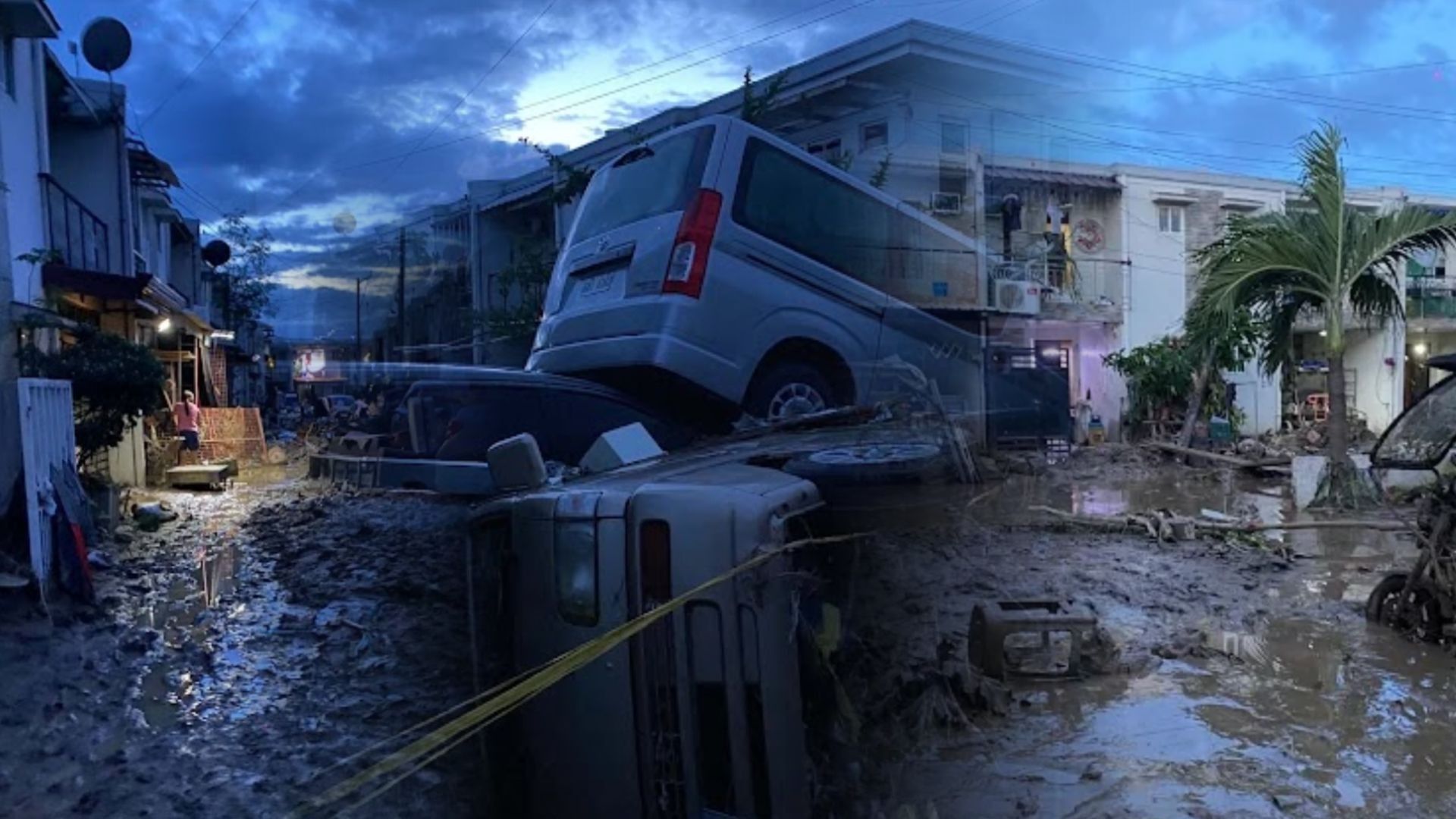
Almost a year after Typhoon Tino, the floodwater is long gone from Palm River Subdivision in Biasong, Talisay City but the fear it left behind is still there.
“It was a traumatic experience for us,” said Joana Dumaqueta, a nursing student who has lived in the subdivision with her family for over 10 years.
Before Tino, she said, the neighborhood felt prepared. Typhoon Odette had flooded the area years earlier, but the water was far shallower than what would come later. They thought that would be the worst.
The community was also used to helping one another. Joana said there was always bayanihan in their street during different situations. Whenever the news announced a storm, her family simply stocked up on groceries. That was the extent of their routine.
Around 5 a.m. on November 4, 2025, the neighbors’ group chat lit up with word that the flood was rising. Joana’s family moved their belongings above knee height, expecting water to enter the house and hoping to avoid serious damage.
Then everything sped up. By 5:10 a.m., the canals had clogged and the water was climbing by the second. By 5:15 a.m., it was in the garage. Soon after, it was inside the house.
“That was when my adrenaline went crazy,” she said. The family rushed to carry appliances and furniture to the second floor.
Despite being at least 5’5” tall, Joana said the water was already deep enough that they were floating.
Afterward, they waited on the terrace, watching the water and preparing important documents and food in case it reached the second floor. The water stopped just one step short. They laughed and joked with their neighbors, Joana said, but deep inside, they were sad. What they had lost was what her parents had spent years working for.
Their street was not alone. Typhoon Tino devastated the riverside communities of Biasong and Dumlog after the nearby Mananga River overflowed. The river swelled and claimed seven lives in Talisay, as floodwater covered riverside communities and subdivisions.
Joana described the recovery as two feelings that would not separate: anger and grief. Money was tight. Clean water and electricity were hard to find, while grocery shelves were empty and bottled water was sold out across the area. As a nursing student, she still had hospital duty while her home was covered in mud.
The loss she thinks about most isn’t an appliance. It is the photo frames that held pictures of her late grandmother, including the last photos of the two of them together.
She described them as picture frames that held a thousand memories.
Today, even light rain sends her household into preparation mode. They raise important belongings and buy supplies in advance.
The whole neighborhood reacts the same way. Joana said residents would go to the side of the creek to check the flood. Neighbors also watch the mountains for signs of rain upstream. Rain is no longer something ordinary.
What residents fear is not the water that comes now, which is often shallower than during Tino. It is not knowing when it will stop. Almost a year has passed, yet nothing has visibly changed. Officials have funds set aside for flood control, so she wonders why none of it seems to have reached their side of Talisay. She believes they will wait for it to flood again.
She doesn’t dismiss the help that has come. She is grateful to the private groups that were first to arrive. But relief after the damage, she argued, cannot replace protection before it. She said officials must think about long-term solutions rather than giving band-aid solutions every time a disaster strikes.
Public records show that work has begun, though much of it is large in scale and still unfinished.
The failures were acknowledged early. In the days after the typhoon, the DPWH visited flood-hit areas in Talisay and called the flood control structures poorly planned and poorly executed, saying officials had to determine whether there was foul play. The DPWH also said it would carry out a Cebu flood control master plan from 2017 that had been shelved for years.
On the Mananga River itself, the DPWH planned to widen the river to 30 meters, while Talisay City Mayor Gerald Anthony “Samsam” Gullas Jr. said the city would use its own equipment for the cleanup, which began at the river mouth in Barangay Dumlog. Dredging and widening started at the mouth of the river in Barangays Dumlog and Biasong, the DPWH regional office said. By late March, officials said the cleanup and repair of the river were about halfway done, and the city was planning to turn the cleared areas into a public eco-park.
In June, President Marcos announced that a 70-meter dam along the Mananga River had been guaranteed a place in the 2027 National Expenditure Program. He also said that the emergency rehabilitation of the river’s flood mitigation structure, which began after Tino using gabions, was expected to be finished by the end of July 2026.
The city government has focused on response and relocation. During his State of the City Address on October 8, Mayor Gullas acknowledged that Tino exposed weaknesses in disaster response and infrastructure. He cited continued training for emergency responders, better equipment and communications across the 22 barangays, and proposed monitoring systems along the Mananga River.
Families who lost their homes stayed in temporary relocation sites and tent cities, while the mayor said finding suitable land was difficult, with the city still renting properties for temporary settlements. Along the river, no-build-zone signs have been posted in places such as Sitio Isla Verde in Barangay San Isidro.
Not everything has moved as promised. A review before the anniversary found that a P144.7 million flood control project upstream on the Mananga River was only about 36 percent complete against its January 2026 target. In the days around the anniversary, survivors also protested outside the DPWH Cebu office, citing government neglect and the need for justice for victims. Provincial figures show 143 dead and 45 still missing across Cebu, while a P777 million rehabilitation fund was still awaiting a presidential signature.
For residents like Joana, the gap between those announcements and what she sees from her street is the point. The dam is still a budget item, and the river work is still being finished. Until then, a strong rain can feel like the start of the same morning from last year.
If it is so frightening, why stay? Joana’s answer is practical. Her family is paying for the house through a rent-to-own arrangement, and her father is halfway through the payments. They have nowhere else to go, and moving would cost money they don’t yet have.
So they stay and prepare, and they keep watch whenever it rains.















Comments