On the day Typhoon Tino unleashed its fury, 31-year-old Krizza June Espra was supposed to be starting a new chapter in her life. It was her first day at work, one that she never expected would end in unimaginable loss.
Krizza lived in Barangay Cotcot, Liloan, with her family. They had built their home there in 2009 and were looking forward to celebrating their 10th wedding anniversary.
Her husband, a Maxim rider, decided not to work that day so he could stay home and look after their kids as the storm approached.
He spent the morning tying their roof with ropes, worried that strong winds might destroy it, just as they had during Typhoon Odette years earlier.
A Decision to Evacuate
Later that day, the couple decided it was best to evacuate. They owned another house in Compostela, a concrete structure located on higher ground. Her husband brought their children there first, then returned to Cotcot to fetch Krizza.
Together, they made their way back to Compostela, expecting strong winds but not floods. She shared that their place there never floods even with strong rains.
But as the night passed, the storm grew stronger. By early morning, water had already entered their home, first reaching their feet, then their waists as soon as they opened the door.
They were stunned. The rain had not seemed enough to cause flooding. She stated that they did not know where the water came from.
“Mura’g naa’y kalagot ang tubig, dagko kaayo ang balud,” she shared.
Clinging to Hope
The water’s current was so powerful that they had to climb onto the roof using the ladder of a water tanker by their house. On the roof, her husband embraced his family tightly, whispering prayers and words of comfort.
“Sige siya’g ingon, ‘mabuhi ta, magpakabuhi ta,’” Krizza said.
Moments later, a nearby house collapsed, triggering a domino effect that crushed several homes — including theirs. The surge swept them away. No one saw it coming. People fought desperately between life and death, gasping for air, struggling to break free from the relentless current that pulled them under.
“Abi nako’g wala na gyud ko ato,” she said. Her mind went blank, only remembering that she was submerged in the strong flood that also swept other residents nearby.
A Fight for Life
Amid the struggle for survival, thoughts of her husband and children consumed her. She wondered if they had made it too, as memories of their life together — the joys, the hardships, and the quiet moments in between — rushed through her mind.
Eventually, she was swept into a tangle of debris near a coconut tree. Drawing on every ounce of strength she had left, she clambered up the tree, her body numb and trembling, her mind swirling with fear. From above, she watched the floodwaters carefully, and slowly, the fence of a nearby house began to emerge, a hopeful sign that the waters were finally receding.
But she didn’t climb down immediately. She stayed there, trembling from the cold, her body numb, her heart heavy with uncertainty.
Desperation took over as she pounded a water gallon against the tree, hoping, praying that someone, anyone, would hear her.
Then, through tired eyes, she saw figures moving in the distance, searching for survivors. Summoning every last bit of strength, she screamed for help, her voice raw with hope and terror.
Hearing her cries, they shouted back, “Huwat diha! Huwat!”
Moments later, they returned with a large basin to help bring her to safety. But even after being rescued, her mind remained trapped in the terror of that tragedy.
The Aftermath
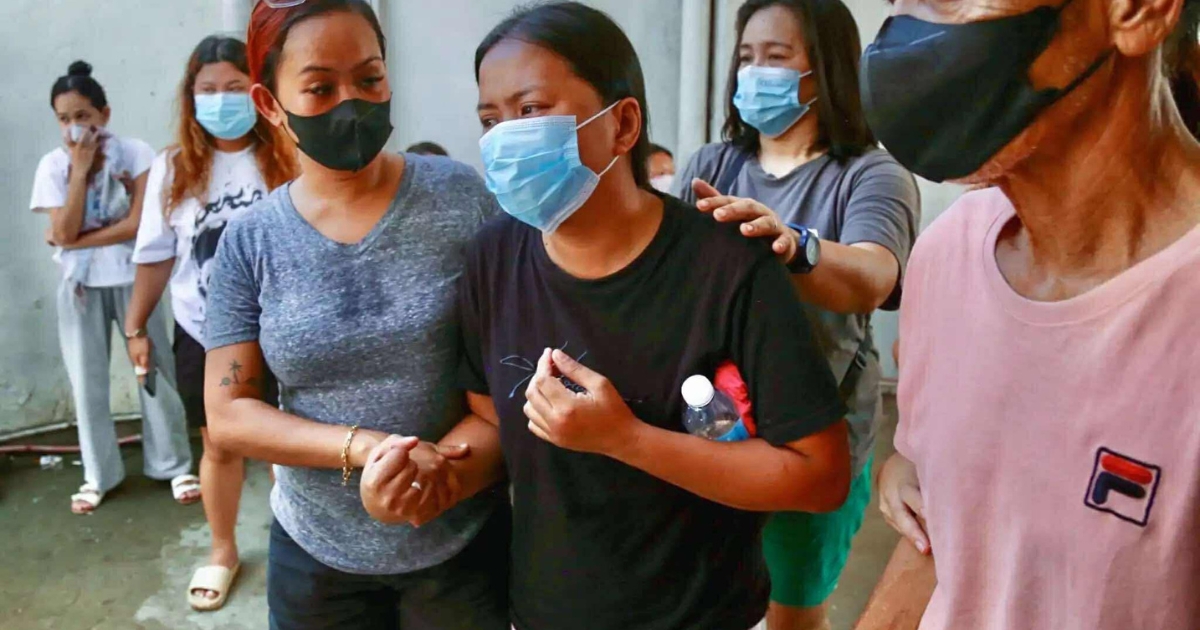
Nothing also remained of the home they once cherished in Cotcot, just the bare, shattered floor. Her life felt equally emptied. The bodies of her husband and father were found lying close together, while her mother was still missing. Her children were discovered in separate locations, the youngest lying near the sea. The physical loss was unbearable, but the emotional wounds cut even deeper, leaving a hollow ache that no words could fill.
In the days that followed, Krizza could barely sleep. She would only rest for two hours at a time. Every time she closed her eyes, she relived the sounds — the deafening roar of rushing water, the screams of the people, and the collapsing houses.
She wakes, drenched in sweat, heart racing as if the water were still coming for her. Even a gentle breeze now terrified her; the sound of a fan, the trickle of rain, and even the stillness of the night brings back the memory of when the flood swept her loved ones away.
Finding Faith Even After the Storm
It was a difficult reality to accept, how a single storm could change one’s life so drastically. She questioned God, begging for answers, for clarity. It was a burden so heavy to bear. It was a pain like no other — how she could no longer hear the laughter of her children once more, or embrace her husband for a second longer.
Struggling to understand her pain, Krizza sought help from a priest, pouring her heart out and asking for guidance. Then, she found clarity — that perhaps her husband couldn’t have endured a world without their children.
Now, Krizza holds on to faith and hope. She shared that she has already entrusted everything to the Lord; that thinking about the tragedy over and over won’t help.
She held on to the idea that her family wouldn’t want to see her lost in grief.
Through it all, Krizza found comfort in her brother, who became her source of strength. Still, she wants him to grieve, knowing that he is also experiencing the same pain. She knows that he puts up a strong facade for her even though he is also hurting.
Choosing to Move Forward
Krizza has received donations and offers of help online, including those promising to help her rebuild her home.
However, all she asks is for people to pray for the victims of the typhoon, because even after the storm, the memories can still come back to haunt them. The loss, a constant reminder of how fate can sometimes be so cruel, so unfair. Every quiet moment, every familiar sight can bring it all rushing back, a reminder that the storm’s devastation did not end with the rain.
“Na-trauma na ko, di na ko gusto og balay, kay bisan concrete ang balay, kaya rang gub-on,” she said.