
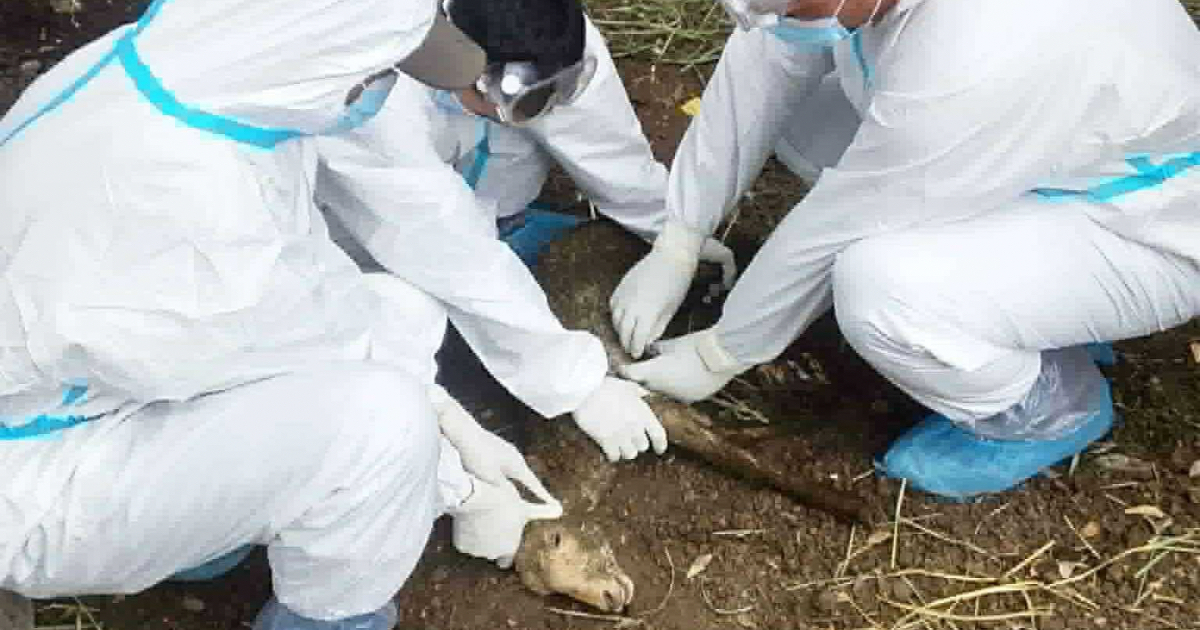
GENERAL SANTOS CITY – In a first for the region, the City Veterinary Office (CVO) has officially confirmed a case of rabies in a sheep, prompting immediate public health advisories and renewed calls for strict animal vaccination.
The Regional Animal Disease Diagnostic Laboratory 12 (RADDL) provided the definitive diagnosis. “Naghatag ang RADDL positive nga result sa first time nga dili sa iro sa karnero nga ulo (RADDL provided a positive result for the first time in a sheep, not in a dog),” confirmed Dr. Edward Alexander Leyson, the City Veterinary Head.
The infected sheep is believed to have contracted the fatal virus from a rabid stray dog. Dr. Leyson explained the suspected transmission: “Ang suspect nako ana naay stray dog, usually diya man gud na gikan sa ilaha. Siguro, napaskan then after siguro 14 days naa nay sign kay observation na for 14 days. Diya na mag-incubate (My suspect is a stray dog, that’s usually where it comes from. Perhaps it was bitten, and after about 14 days signs appeared because the observation period is 14 days. That’s when it incubates).”
This confirmation has raised alarm bells among local residents and farmers, highlighting a critical gap in community-wide animal disease control. Rabies is a zoonotic disease, meaning it can be transmitted from animals to humans, and is nearly 100% fatal once clinical symptoms appear in any mammal.
Urgent Call for Responsible Pet Ownership
While there is no new public health advisory specific to this case, health authorities consistently emphasize rabies prevention due to its nearly 100% fatality rate in mammals, including humans. The primary defense remains vaccinating pets. The Department of Health (DOH) has recorded 260 human rabies cases nationally in 2025, highlighting the ongoing threat.
This is a call to all pet owners, especially those with dogs and cats, to ensure their animals are vaccinated against rabies immediately and to keep their vaccinations current. Officials also remind the public that responsible pet ownership includes not allowing dogs and cats to roam freely unsupervised.
It is also advised to stay informed through official channels and to treat any potential exposure to animal bites with extreme seriousness by washing the wound thoroughly with soap and water for at least 15 minutes and seeking immediate medical attention for post-exposure prophylaxis.
📸 Jeckul Gervacio

Comments