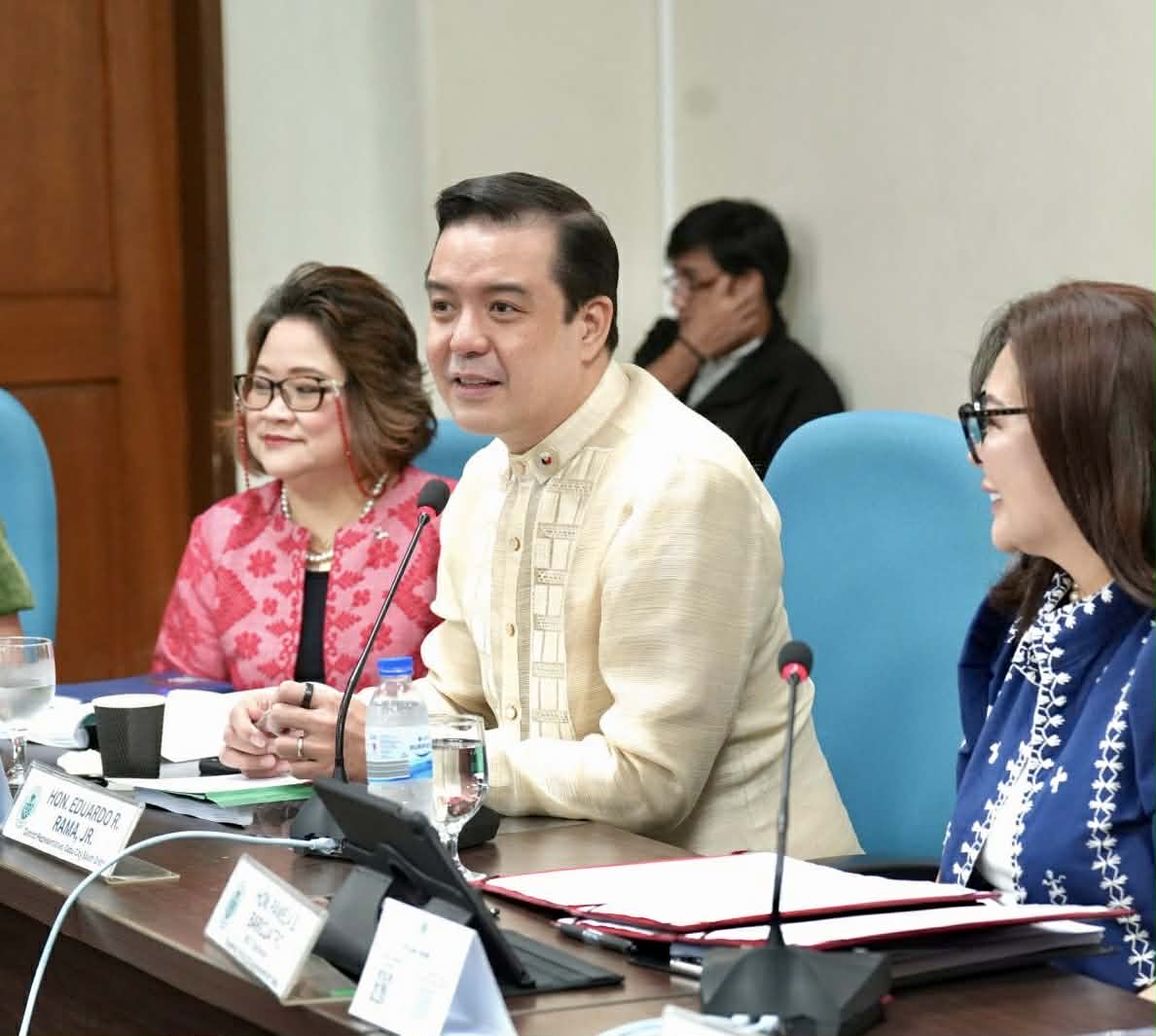
Cebu Province’s long-standing label as the richest province in the Philippines does not necessarily translate to real financial capacity on the ground, Governor Pamela Baricuatro said, questioning the value of the ranking if residents do not feel its impact.
Baricuatro made the remark on Wednesday, December 17, after the Commission on Audit released its 2024 Annual Financial Report, which again ranked Cebu as the wealthiest province in the country.
COA data showed that Cebu posted a net worth of P336.42 billion in 2024, backed by total assets worth P339.85 billion and liabilities amounting to only P3.43 billion.
Despite the figures, the governor said the numbers do not accurately represent the province’s ability to fund programs or deliver essential services.
She explained that a significant portion of Cebu’s reported wealth comes from the appraisal of government-owned land, an issue she said she had already raised during the election campaign.
Baricuatro pointed out that Cebu differs from many other provinces because it includes land appraisals in its asset valuation.
“What’s the point?… Wala na feel sa atong tao atong pagkarich,” Baricuatro said.
She shared that discussions with fellow provincial leaders showed that most provinces do not include land appraisals when reporting their assets, a difference she said largely explains why Cebu consistently tops the wealth ranking.
Although Cebu has held the top spot for 11 consecutive years, Baricuatro stressed that much of the province’s wealth remains theoretical, as many high-value properties are idle and not generating actual economic returns.
Provincial officials clarified that the increase in total assets—from about P303 billion in 2023 to P339.85 billion in 2024, or a 12.2 percent rise—was largely driven by updated valuations of government real estate.
COA data also showed that equity accounted for more than 99 percent of Cebu’s total assets, reflecting minimal debt exposure.
However, provincial leaders cautioned that strong equity does not automatically mean sufficient cash is available for daily operations and public services.
Provincial Administrator Atty. Ace Durano echoed the governor’s position, saying the size of Cebu’s asset base can be misleading.
Durano noted that while the province owns vast tracts of land, many of these properties remain unused and unproductive, creating the impression that the provincial government has more spending power than it actually does.
He added that expectations for large budgets often do not align with the province’s real financial capacity, particularly when it comes to liquid funds needed to deliver services.
Durano said what residents ultimately need are concrete services that rely on available cash rather than paper wealth, adding that Cebu’s asset base is largely the result of historical accumulation rather than recent governance performance.
COA’s report showed that Rizal Province ranked second nationwide, with total assets of P44.10 billion and equity of P40.84 billion, figures far below Cebu’s.
Other provinces included among the wealthiest were Camarines Sur, Batangas, Cavite, Ilocos Sur, Davao de Oro, Iloilo, Negros Occidental, and Bukidnon.
Among cities, Mandaue City placed ninth nationwide with assets valued at P35.78 billion and equity of P34.9 billion. Cebu City ranked 12th, posting P31.4 billion in assets and equity of P18.3 billion, reflecting liabilities totaling P13.1 billion.
COA’s annual financial report evaluates the fiscal standing and overall financial condition of government units nationwide. (SBA)