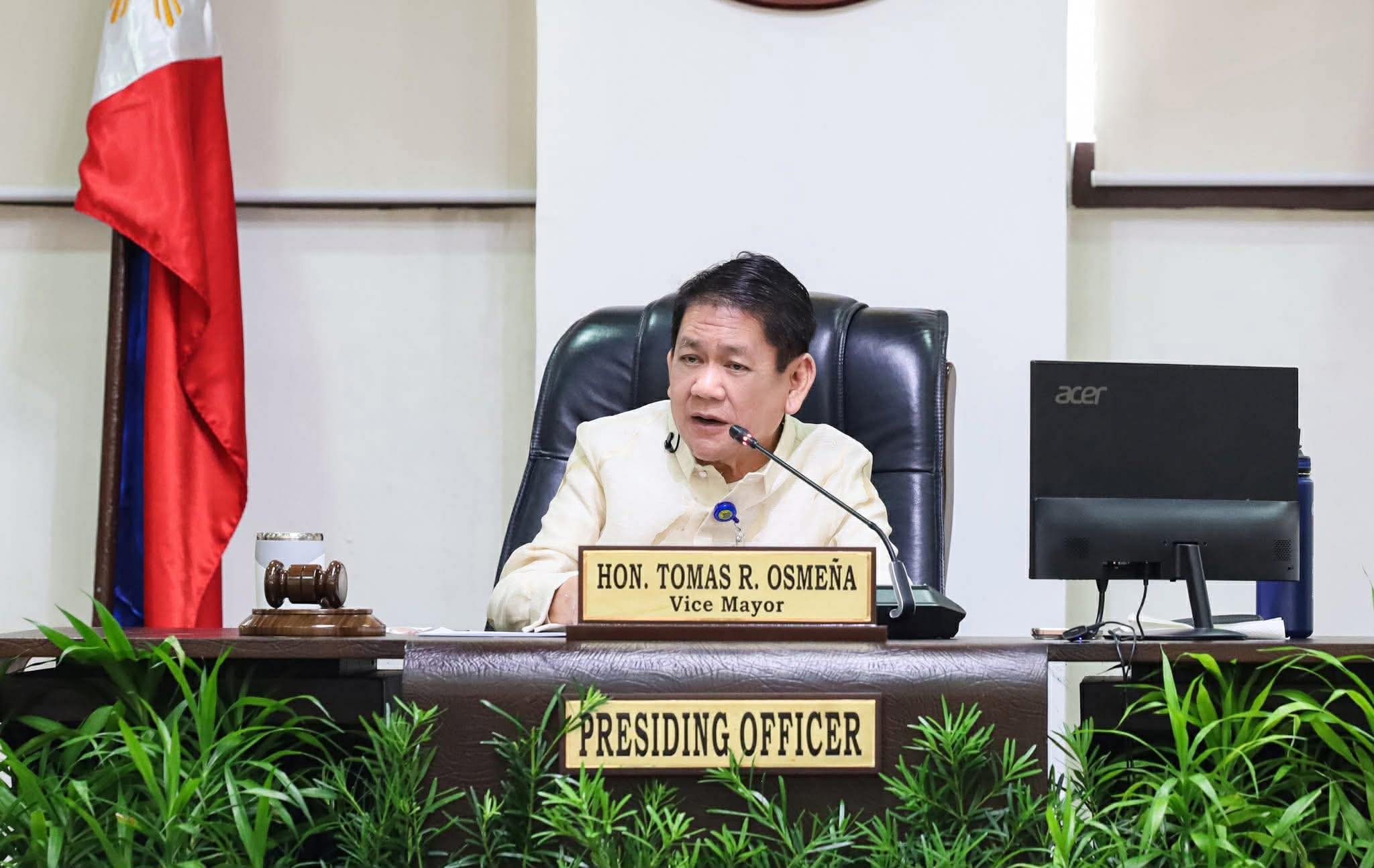
Cebu City Vice Mayor Tomas Osmeña has urged the national government to revisit laws banning incineration, warning that the city’s reliance on landfills and long-distance hauling is driving garbage disposal costs to as much as P700 million annually.
Osmeña made the call during a press conference as the city struggles with rising hauling expenses and limited disposal options following the shutdown of the Binaliw landfill after a deadly collapse on January 8.
“It’s so expensive to bring garbage to another area,” Osmeña said, noting that hauling waste to distant landfills imposes heavy financial and operational burdens.
“We are spending P500 million to P700 million a year just on hauling and tipping fees,” he added.
He compared the Philippines’ approach to waste management with other major cities abroad, citing Paris and Taipei as examples of urban centers that operate modern incineration facilities without harming the environment.
“In Paris, you can have incinerators in the city. In Taipei, you walk outside a mall and there’s an incinerator. But here, they say no, that it’s harmful to the environment, then we send garbage to landfills and it ends up costing us hundreds of millions,” he said.
Osmeña also cited New York and other advanced cities that have adopted modern incineration technologies, which reduce waste volume and lessen the need for long-haul transport. He said relying solely on distant landfills adds travel time, fuel consumption, and strain on garbage collection schedules.
“One major factor is the time it takes to transport garbage. There are many problems involved, but this is something the national government has to address,” Osmeña said.
He argued that the lack of a national law permitting modern incineration facilities remains a major barrier to solving Cebu City’s long-standing waste management challenges.
“If we cannot solve this, then the Philippine government should pass a law that allows us to be like other countries and use modern incinerators,” he said.
Under the Philippines’ Clean Air Act, incineration that emits toxic and poisonous fumes is prohibited, a provision long defended by environmental groups. Local governments, however, contend that newer technologies can meet stricter emission standards.
Earlier this month, Minglanilla and Talisay City declined to accept Cebu City’s waste, citing environmental risks, legal constraints, and limited capacity.
The refusals were raised during a January 22 emergency meeting convened by the Department of Environment and Natural Resources.
The Binaliw landfill in Barangay Binaliw remains closed after the January 8 landslide killed 36 workers on site and a volunteer rescuer who later died in the hospital.
The DENR’s Environmental Management Bureau issued a cease-and-desist order against the landfill operator, Prime Integrated Waste Solutions Inc., allowing only cleanup and stabilization activities.
In the interim, Cebu City is hauling garbage to a privately operated landfill in Barangay Polog, Consolacion, under a limited arrangement.
Officials are also exploring disposal options in Bogo City and Aloguinsan, though negotiations are still ongoing. (LLP)
Image/ Sangguniang Panglungsod Cebu City - Secretariat