With only a few dry months left, the national government is accelerating river rehabilitation works in Cebu to reduce the risk of flooding once the rainy season sets in.
The move follows the damage caused by Typhoon Tino, which exposed how silted and constricted waterways worsened flooding in several communities. River systems are now being treated as urgent infrastructure priorities rather than routine maintenance concerns.
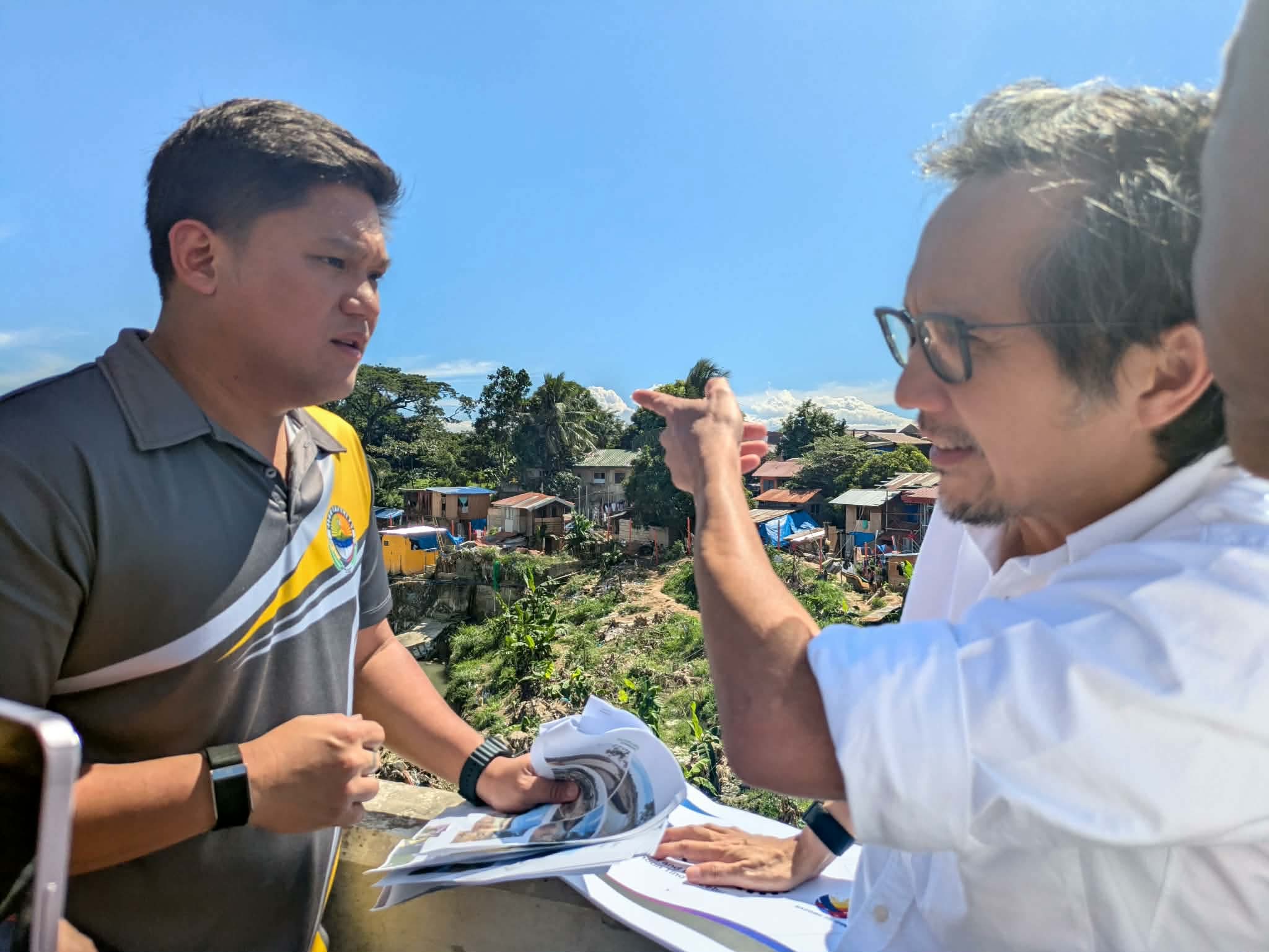
During a recent inspection in Talisay City, Department of Public Works and Highways (DPWH) Secretary Vince Dizon said the window before the next rainy season must be maximized to implement immediate solutions.
“We have to take advantage, mayroon tayong time between now and the next rainy season in June or July to make sure that we can have solutions already,” Dizon said.
He stressed the need for visible progress on the ground before midyear instead of waiting for another storm to expose the same vulnerabilities.
“Now is the time to start fixing the problem,” he added.
Among the river systems identified as critical are the Mananga River and the Butuanon River. DPWH is prioritizing dredging and desilting works that can be completed within five to six months while longer-term flood-control projects remain in the planning stage.
For the Mananga River, clearing operations have started near its outlet in Barangay Dumlog.
Engineers, however, said major challenges remain upstream, where narrowing river channels limit water flow.
Dizon noted that sections of the river that were once about 30 meters wide have shrunk to nearly half due to encroachment and natural sediment buildup.
Narrower channels cause water to move faster and with greater force, increasing the risk of flash floods downstream.
Restoring rivers to their original width, he said, involves not only excavation but also enforcing no-build zones along riverbanks.
This affects families living in hazard-prone areas, whom authorities say cannot be allowed to return even after floodwaters recede.
National agencies such as the National Housing Authority and the Department of Human Settlements and Urban Development are expected to lead permanent housing efforts, while local governments are tasked with identifying safe relocation sites.
In Talisay City, Mayor Gerald Anthony “Samsam” Gullas Jr. acknowledged the difficulty of finding suitable land, noting that the city is still renting properties for temporary tent settlements.
He said additional interim sites may open, but stressed that temporary shelters are not a long-term solution for families repeatedly displaced by flooding.
Gullas also said the city is ready to assist in speeding up river works by providing equipment and logistical support, as long as DPWH gives technical guidance.
While short-term measures are underway, Dizon said large-scale flood-control projects such as upstream dams remain part of the long-term plan, although these could take years to complete. (SBA)