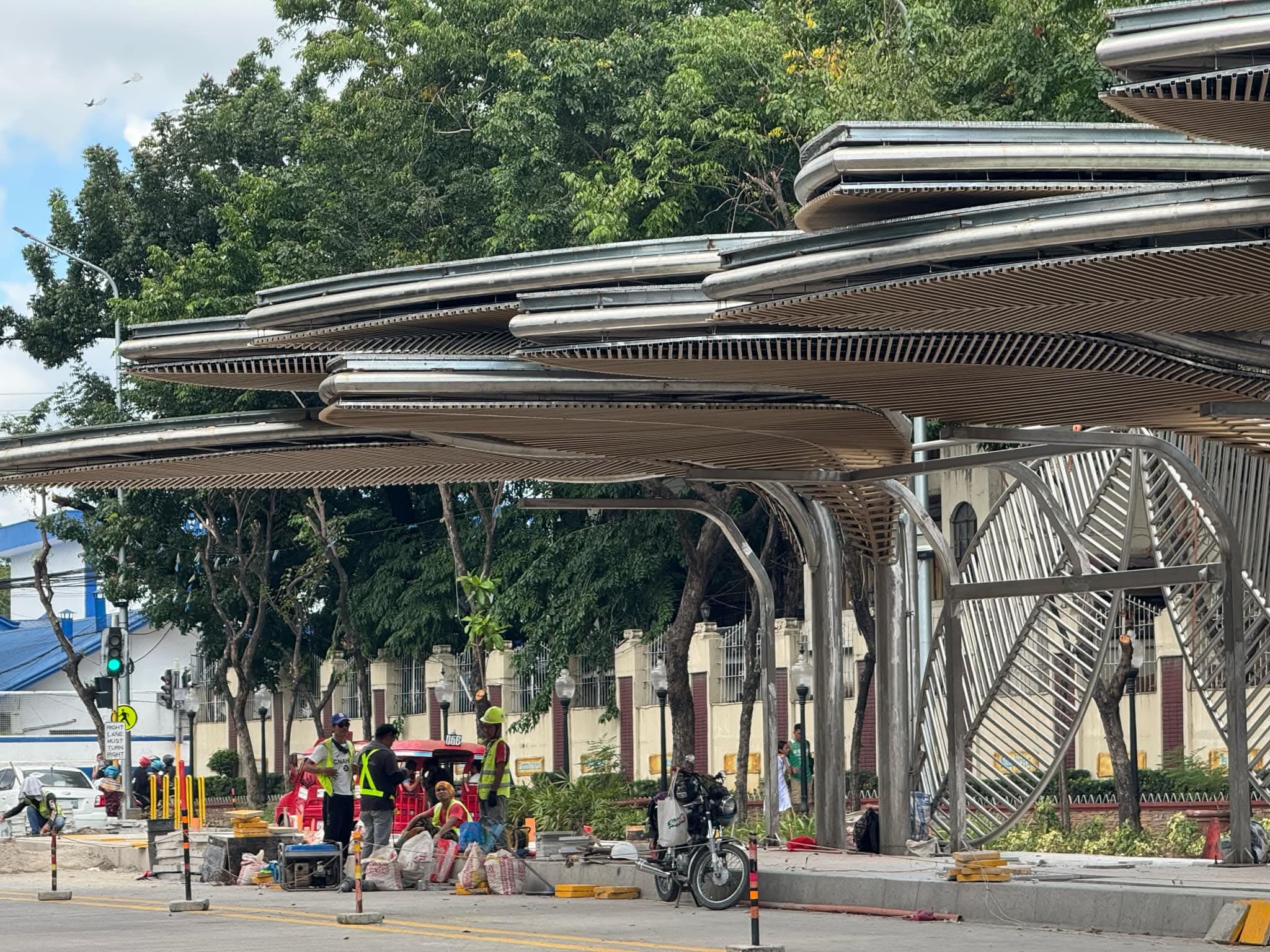
After years of stalled timelines and missed launch dates, the long-promised Cebu Bus Rapid Transit (BRT) project is again under scrutiny.
Cebu City Councilor Winston Pepito has formally appealed to President Ferdinand Marcos Jr. to intervene and push the project to completion.
Pepito, chairman of the Cebu City Council’s transportation committee, sent a letter to the President on February 8, urging Malacañang to treat the BRT as a national priority amid worsening traffic conditions and an undetermined launch date for the project’s first operational phase.
“I respectfully urge the prioritization and immediate completion of the Cebu Bus Rapid Transit Project, a long-delayed initiative that is critical to addressing the worsening transportation crisis in Cebu City,” Pepito wrote, addressing the letter to Marcos through Executive Secretary Ralph G. Recto.
He framed the appeal as both an economic and governance issue, noting that Cebu—described as the country’s second-largest metropolitan area—plays a central role in national growth yet continues to operate without a modern, high-capacity public transport system.
Pepito added that completing the BRT under the Marcos administration would provide immediate relief to commuters and demonstrate decisive leadership in the Visayas.
Mayor Nestor Archival said the city remains dependent on the national government for the schedule of the official inauguration.
“There are still no plans as to where the official launching of Phase 1 will be. We are still waiting for the national government on the schedule,” he said.
The statement follows another postponement by the Office of the President of the launch of Package 1 operations, which had been tentatively scheduled for December.
Beyond the inauguration, several operational issues remain unresolved. Archival said the city and the Department of Transportation (DOTr) still need to finalize the BRT’s initial route and dry run plan.
While earlier discussions focused on a Fuente Osmeña–South Bus Terminal alignment, Archival proposed an alternative route starting at South Road Properties (SRP) and passing through the South Terminal, Jones Avenue, Fuente Osmeña, and Ayala Center Cebu. The proposal has yet to be finalized.
Earlier attempts to advance the project also stalled.
A planned road inspection in September was halted due to traffic flow concerns, and a ceremonial inaugural run scheduled for November 5 was canceled after Typhoon Tino struck Cebu the day before.
The prolonged rollout has begun to affect financing.
The World Bank has pulled out its funding support for Packages 2 and 3 of the Cebu BRT, citing slow implementation. While financing for Package 1 remains, continued support is contingent on significant progress before the loan expires in 2026.
The bank has encouraged Cebu City to explore private sector financing and urged local and national agencies to accelerate construction
The Philippines originally secured $116 million from the World Bank and $25 million from the Clean Technology Fund for the project.
When Phase 1 finally begins operations, likely later this year or in early 2026, it will mark the first operational chapter of a project nearly 30 years in the making.
Package 1 spans 13 kilometers of dedicated lanes with 17 stations, running from South Road Properties to Cebu IT Park.
Once operational, it will become the first bus rapid transit system in the Philippines.
Proposed in the 1990s to address Cebu’s growing traffic problems, the BRT has been repeatedly delayed by leadership changes, right-of-way and heritage issues, funding constraints, and shifting political priorities. (LLP)