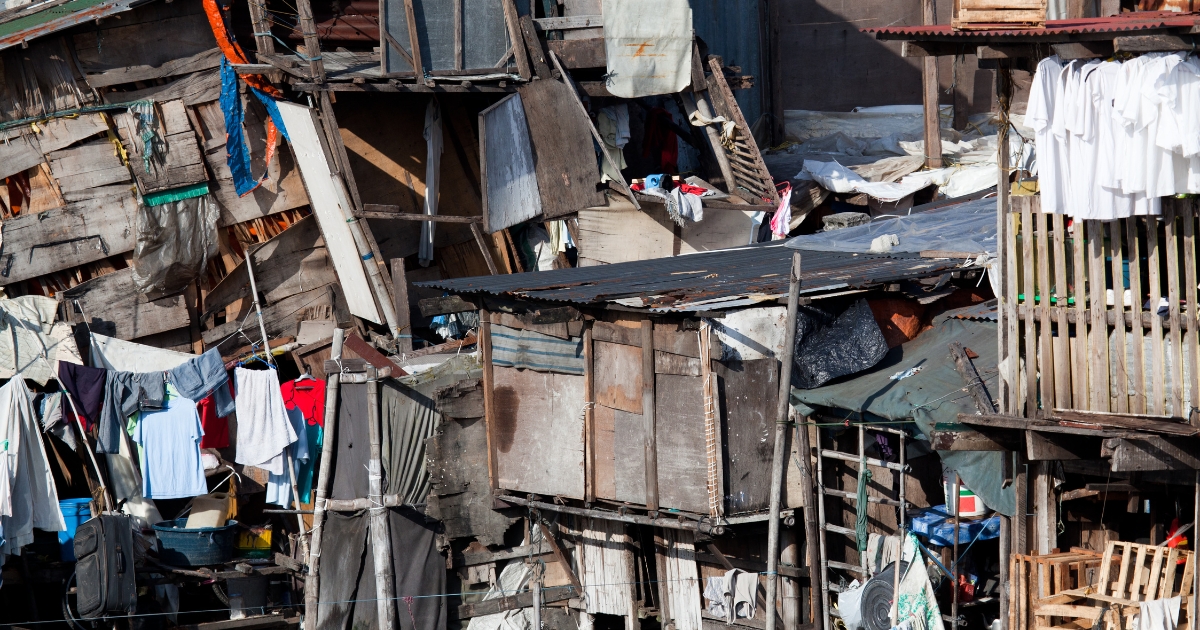
Households forced to rely on illegal electricity lines face constant fire risks, prompting Cebu City to draft a measure that would cover connection fees and give families a safe, legal way to power their homes.
Authored by Councilor Mikel Rama, the proposal, dubbed “Kuryente sa Katawhan” or the Cebu City Inclusive Electricity Access Program, seeks to establish a city-funded facilitation and deposit support system that would allow indigent households to access electricity legally through a revolving fund.
Under the proposed ordinance, the city would advance required bill deposits and application fees for qualified beneficiaries, addressing what it describes as a “poverty penalty” that prevents low-income families from securing formal electricity connections because of high upfront costs.
In its explanatory note, the ordinance cited findings from the Japan International Cooperation Agency’s Roadmap Study for Sustainable Urban Development in Metro Cebu, which identified persistent infrastructure gaps in unserved urban settlements.
While formal consumers benefit from regulated lifeline rates and safety standards, the measure noted that indigent households, particularly those in informal settlements, are often excluded from legal connections due to the lack of funds for deposits or the absence of land tenure documents.
As a result, many residents resort to illegal jumper connections or unsafe submetering, which the Bureau of Fire Protection has repeatedly identified as a leading cause of residential fires in urban poor communities.
“These unregulated sources have been repeatedly identified as the primary cause of residential fires in densely populated urban poor communities,” the ordinance stated, warning that such incidents lead to loss of life and property while imposing recurring costs on the city’s disaster response and housing programs.
The proposal calls for the creation of a Revolving Electricity Guarantee Fund, to be maintained as a special account under the city’s general fund. The fund would be used exclusively to pay electricity bill deposits and application fees, with repayments returning to the fund to finance future connections.
Financial assistance would be capped at P5,000 per household, with beneficiaries allowed to repay the amount over up to 24 months under terms to be finalized through a memorandum of agreement between the city and the authorized distribution utility.
The ordinance would authorize the city mayor to enter into the agreement, covering deposit facilitation, expedited application processing, and data sharing on unserved areas, subject to franchise obligations and Energy Regulatory Commission rules.
To help utilities identify viable expansion areas, the proposal introduces a demand aggregation mechanism.
Once at least 30 verified applications are recorded within a contiguous area, the City Planning and Development Office may certify the location as a Priority Electrification Zone, signaling sufficient demand for utility evaluation.
The measure clarifies that it does not regulate electricity rates, alter franchise obligations, or encroach on the regulatory authority of the Energy Regulatory Commission or the Department of Energy.
It also allows loan condonation in cases of force majeure, such as fire, typhoon, or lawful displacement, subject to council approval and Commission on Audit rules.
Barangay certifications of residency and occupancy would serve as primary proof of tenure, while the Office of the Building Official would coordinate safety inspections to ensure installations comply with technical and fire safety standards.
Initial funding would be identified by the city’s Local Finance Committee and included in the Annual Investment Plan, subject to fund availability and auditing requirements.
If approved, the mayor’s office would be tasked to issue implementing rules and regulations within 60 days. (LLP)